The Cancel Button: What's Left for Humans When Air Defense Goes Automatic
Key facts
- 5% automation. Ukraine's MaXon Systems interceptor platform automates ~95% of a Shahed engagement; the operator approves the strike and can cancel until impact. Combat-tested in Kharkiv region.
- +35% per month. Ukrainian Digital Transformation Minister Mykhailo Fedorov says Russian Shahed launch volumes grow ~35% monthly.
- Terminal guidance goes mainstream. Dozens of Ukrainian companies are building AI terminal guidance for interceptor drones; Brave1 named it a priority area for 2026.
- The line is already moving. Ukraine's Octopus interceptor is designed to engage drones without per-intercept human approval; US DoD Directive 3000.09 permits operator-supervised autonomous engagement for time-critical defense of installations.
- Diplomacy trails the battlefield. On Dec 1, 2025, the UN General Assembly adopted its third consecutive resolution on autonomous weapons (A/RES/80/57), 164–6 with 7 abstentions. The UN Secretary-General calls for a binding treaty by end of 2026 banning systems without human control.
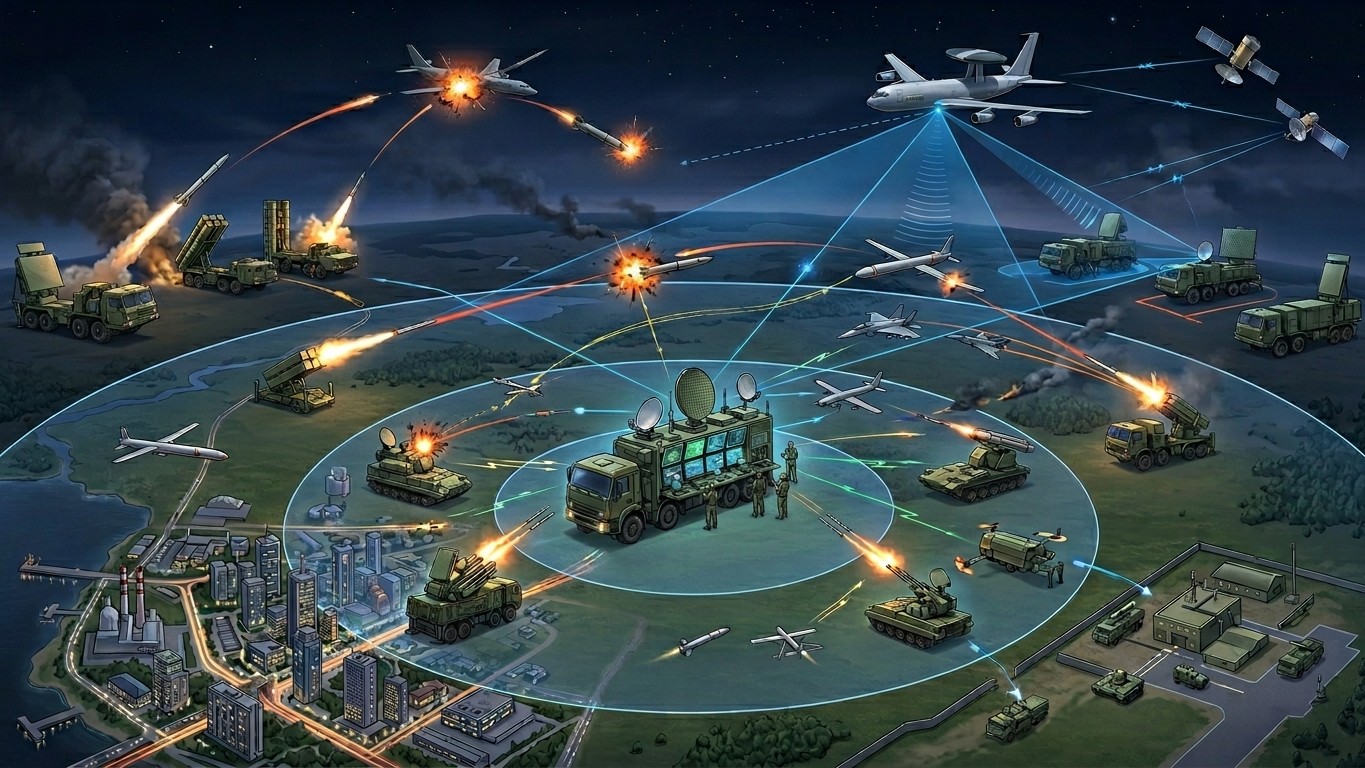
95 percent. That's how much of a drone intercept Ukraine's newest air defense system handles on its own. On May 22, 2026, Ukraine's defense tech cluster Brave1 announced that a system by MaXon Systems had passed combat trials in the Kharkiv region: radar feeds in the target, an operator clicks it on a screen, and software flies the interceptor drone the rest of the way. The onboard AI finds the Shahed, locks on, and rams it. The human contribution has shrunk to two actions - approving the shot, and being able to cancel it at any moment before impact.
That last part is the subject of this explainer. Not the drone, not the AI - the cancel button. Because the most important question in air defense right now is not whether machines can shoot down drones. They can. It's where the human sits while they do it.
Why the machines are taking over
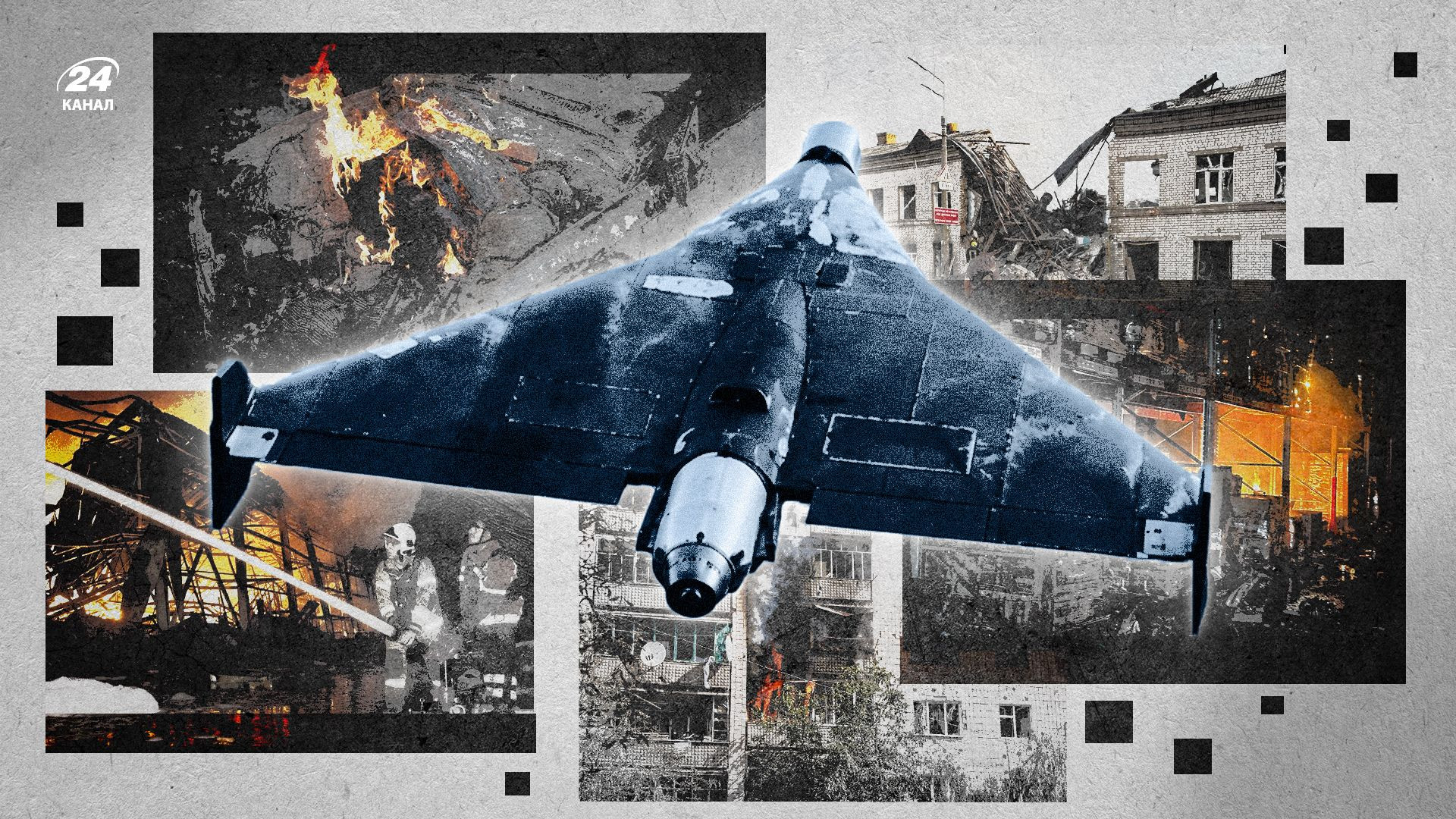
The reason is arithmetic, not ideology. Ukraine's digital transformation minister Mykhailo Fedorov has said Russian Shahed launch volumes are growing by roughly 35 percent per month (his figure - treat it as one side's claim, though the trend matches independent counts of record launch nights). A trained human operator can manually fly one interceptor at one target. An attacker who sends fifty drones at once doesn't need to beat your technology - they just need to exceed your headcount.
Manual interception is also genuinely hard. A pilot has to fly a high-speed drone into a moving target at night, often in wind, sometimes while several other targets cross the same sky. Ukrainian outlet Defender Media reported in May 2026 that dozens of companies are now building "terminal guidance" - the AI takes over the final approach - and that Brave1 has made it a priority area for 2026, partly because it lets less experienced pilots achieve results that previously required rare specialists.
So automation is winning, on both sides of the front line, for the same reason calculators replaced mental arithmetic: volume.
A household analogy: the smoke detector and the sprinkler
Think about fire safety in your home. A smoke detector decides nothing - it screams, and you decide what to do. A sprinkler system decides everything - it detects heat and floods the room, no questions asked. You accept the sprinkler's autonomy because its mistake is cheap: wet furniture.
Air defense has the same spectrum, and specialists have names for it. "Human-in-the-loop" - the machine finds targets, a person approves every shot. "Human-on-the-loop" - the machine shoots on its own, a person watches and can override. "Human-out-of-the-loop" - the machine does everything, nobody watches in real time. The entire debate about AI in war is really a debate about which appliance you're building: the smoke detector or the sprinkler.
The catch is that in air defense, a false positive is not wet furniture. The sky over a country at war contains friendly fighter jets, medevac helicopters, weather balloons, birds, and your own drones.
Why everyone still keeps a hand on the wheel
This is not a hypothetical fear. In March and April 2003, during the invasion of Iraq, US Patriot batteries - highly automated systems whose operators trusted the machine's classification - shot down a British Tornado and a US Navy F/A-18. Three aviators died, killed by their own side's automation and the humans who deferred to it. Those two incidents have shaped two decades of Western doctrine: the current US rules (Defense Department Directive 3000.09) allow machine-speed engagement mainly for defending fixed sites against saturation attacks, under human supervision.
Ukraine, despite fighting for survival, has so far made the same choice. The MaXon system keeps a human approving each engagement and able to abort until impact. Brave1 stated in 2025 that its goal is fully autonomous interception with humans kept in the targeting loop. Some Ukrainian units go further on principle: the K2 brigade has said it keeps operators in the loop for armed ground robots not because the technology requires it, but because ethics do. At the same time, the line is moving - The Cipher Brief reported in May 2026 that Ukraine's Octopus interceptor is designed to engage incoming drones without per-intercept human approval, precisely because requiring a click for every target collapses under saturation attack.
The other side of the loop
Now the reason this explainer exists. In a recent post, a Russian Telegram channel laid out a proposed counter-drone architecture for protecting the Russian rear from Ukrainian deep-strike drones: cheap acoustic sensors, AI-guided interceptor drones, and a central AI coordinator that fuses the picture and assigns targets. Structurally, it's a copy of what Ukraine built against the Shahed - the adaptation loop closing in the other direction. (Single source, a concept paper, not a confirmed program. We flag it accordingly.)
One sentence in it deserves attention. Describing the AI coordinator, the author writes that the operator merely sanctions the kill - or the system "acts fully automatically in its zone of responsibility." That parenthetical is the whole debate. The proposal treats removing the human as a feature toggle, not a threshold.
Whether this particular concept ever gets built matters less than what it signals: under pressure from cheap mass attacks, the temptation on both sides is to move from smoke detector to sprinkler. And the loop has a known dynamic - when one side delegates the trigger to gain seconds, the other side feels the cost of every second it keeps a human in the chain.
Where we are in the loop
Diplomacy is running years behind the battlefield. On December 1, 2025, the UN General Assembly adopted its third consecutive resolution on autonomous weapons systems, 164 votes to 6, and the UN Secretary-General has called for a binding treaty by the end of 2026 to prohibit systems that operate without human control. Meanwhile the systems in question are being combat-tested monthly.
What to watch next: whether any deployed interceptor system on either side publicly drops the per-engagement human approval for defended zones; whether Russia fields anything resembling the proposed AI coordinator (so far - a Telegram concept, nothing more); and whether the 2026 treaty process produces a definition of "human control" that the systems already in the field could actually meet.
Why this concerns you
If you live under the flight paths - and in Ukraine, almost everyone does - the cancel button is not an abstraction. It is the difference between a system that can be stopped when the object over your district turns out to be an ambulance helicopter, and one that cannot. The engineering trend is clear: the human share of an intercept has already shrunk to five percent, and the pressure of mass attacks pushes it toward zero. What remains human is a policy choice, made by people, revisable under pressure. Knowing that the button exists - and asking whether it still does, every time someone announces a "fully autonomous" success - is the civilian's part of the loop.