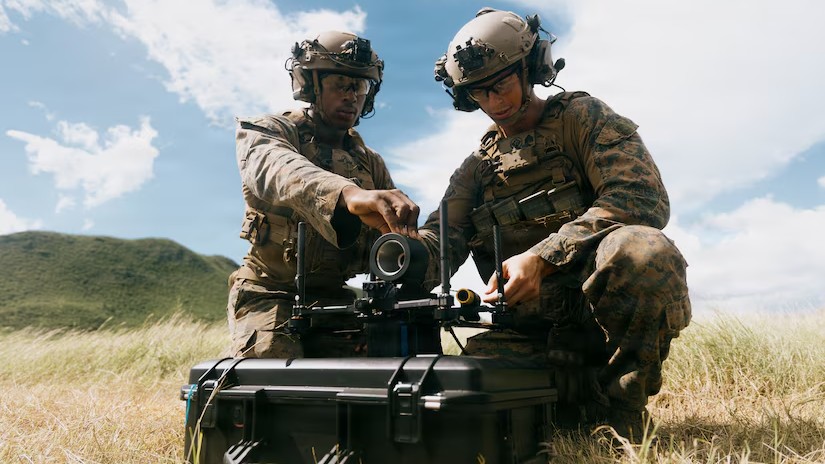
Drone autonomy is a ladder. The war sits on its lower rungs
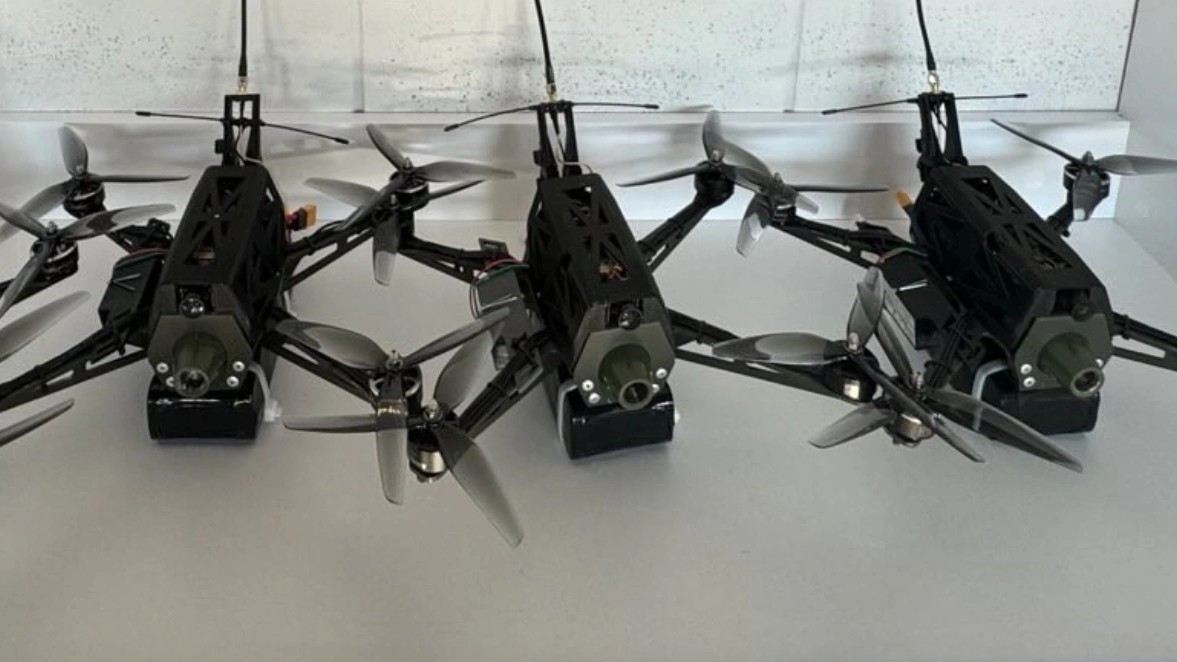
An FPV drone that performs all of its tasks, including acquiring and striking a target, after it jams communication links to the pilot costs approximately $448 dollars, or 18,500 hryvna, which is only slightly above a typical price range of an FPV (Kyiv Post, Forbes, VI). This type of drone is in mass production; therefore, there are large quantities available and are flown by humans who still direct the drone towards the intended target. This represents the lowest rung on a ladder that headlines collapse into the single term "autonomous," as though a drone that acquires a target within the final 100 meters and a drone that independently searches for a target represent similar machines. These types of machines are far different and the difference between them is the entire topic of this article.
Key facts
- Terminal machine vision guidance is the mature rung, in serial production, letting a drone complete a designated strike even when jammed (Forbes, Defense Express, VI).
- Makers claim AI guided FPVs hit around 80% of targets against about 40% for manual control (maker claims via Forbes, CC).
- Adding autonomy is cheap. A complete AI guided FPV costs about 448 dollars, only marginally more than an ordinary FPV, and the guidance module raises the price by roughly 10 percent (Kyiv Post, The Fourth Law, VI and CC). The module itself starts around 50 to 100 dollars (Le Monde via NV, SS).
- The binding limit climbing the ladder is no longer computing power. It is the decision to let a machine choose who dies (Forbes analysis, VI).
What the ladder represents
The ladder is a method to express how much of the function of a drone occurs independent of a human. On the lower rungs of the ladder, the human does nearly every step and only provides some automation. For example, the pilot guides the drone to the designated target, identifies it, and during the final second before jamming disrupts a manual attack, the drone maintains the lock. The upper rungs of the ladder represent additional independence from the human operator. As an example, the drone will continue to fly along a predetermined course once the link to the human operator is severed due to jamming and assume command of the drone again upon re-establishing contact with the human operator. Additionally, the upper rungs of the ladder demonstrate how a drone determines its own release point for a target previously identified by a human. Even farther up the ladder, the drone locates its own path to a target without utilizing satellite positioning in an environment where spoofing has occurred. Instead, the drone relies on what it visually detects with its camera (IEEE Spectrum, VI). At near the highest levels of the ladder, the drone is directed toward a target by the drone itself rather than being pointed toward a target by a human. Furthermore, groups of drones visualize a battlefield and determine locations of jamming and air defense activity and select routes for themselves with little or no human input (Ukraine's arms monitor, SS).
Doctrinally, the line of demarcation between these two extremes exists at roughly half-way up the ladder. On lower rungs of the ladder, a human designates the target and the drone completes the engagement. Near the top of the ladder, however, the drone designates the target and a human authorizes either a specific category or geographic area in which an autonomous system is authorized to engage targets. At the absolute top of the ladder, decisions regarding engagements are made autonomously by the drone. Military forces draw lines in terms of which level of autonomy to employ and that decision is ultimately a policy-based decision, not an engineering decision.
Where does the war really exist?
Mostly all aspects of conflict currently occur on lower rungs of the ladder. Terminal guidance is well developed and mass produced; additionally, around 100 Ukrainian companies are involved in developing systems related to terminal guidance (brave1 via Forbes, VI). Both belligerents utilize these systems. The new generation Geran and Shahed systems have demonstrated capability to locate and acquire targets in the final stage prior to impact without human intervention; these systems can also classify heat signatures regardless of whether jamming is employed (Forbes, VI and SS). Additionally, functionality to operate while losing contact with a human operator and calculate an optimal release point are current functions in service. Functionality enabling a drone to navigate without satellite positioning through utilization of a camera is nearing deployment status (IEEE Spectrum, VI).
The top rungs are farther away than language would indicate
Aspects of technology relating to swarming have been touted as significantly advanced. However, actual swarming requires robust communication networks resistant to jamming that combat still does not provide (The Fourth Law, CC). Leading Ukrainian developer Herman Smetanin states bluntly that much of what people refer to as "swarm" is simply basic coordination or shared visual identification and not collective autonomy (The Fourth Law, CC). Real swarming will require resilient communication networks capable of operating effectively despite interference from electronic warfare. Ukrainian military reported successful testing of an autonomous system controlling multiple drones in February 2026. During testing a single operator controlled dozens of drones operating in a network that planned its own actions with the operator limited to authorizing targets (Herman Smetanin, cc). That was a significant achievement and it remains in a testing capacity.
Skepticism regarding autonomy is also deserved
The initial wave of development in 2024 vastly over promoted development potential relative to actual performance. Systems were deployed ahead of time to operational units and failed to perform adequately due to poor quality video provided by inexpensive cameras. In addition to failing to process changes quickly enough on rapidly evolving battlefields, automated targeting systems also had difficulty maintaining a stable lock on moving targets. Therefore, operators utilized automated targeting systems primarily as an alternative to manual attacks when jamming rendered those methods ineffective (Forbes, VI). 2026 is when autonomous systems began performing effectively as opposed to arriving complete.
Change exists within ratio
While machine learning may be advancing at a rapid pace on the high end of the ladder, it is not the machine at the top of the ladder that presents the greatest opportunity for advancement. Rather, it is where we have moved in relation to ratios. Previously, when One human operated One drone, we referred to it as "One-to-One." Currently, we are referring to it as "One-to-many" -- One human operator can direct multiple drones. When we reach that point, we see a shift in cost exchanges -- a single relatively untrained human operator can launch strikes against multiple targets sequentially (IEEE Spectrum, VI). The change exists within our ability to train larger numbers of personnel as opposed to needing fewer individuals with greater expertise. Training and structural changes are occurring today in regards to lower rungs on the ladder and no One is providing authorization for machines to make kill decisions.
Why climb higher? Why do we have lower rungs?
Lower rungs exist to mitigate effects associated with electronic warfare (ew) that cause loss of signal between manned aircraft and unmanned aerial vehicles (uavs). Uavs that lose their link with manned platforms become immune from ew countermeasures. Fiber-optic cables provide immunity from ew by physically connecting manned platforms and unmanned aerial vehicles together through fiber-optic cables. Unfortunately, this creates constraints -- both militaries face shortages in supplies of fiber-optics due to increased demand from data centers purchasing fiber-optics for artificial intelligence applications (GlobalSecurity, VI & SS). Therefore, increasing reliance on onboard intelligence exists as an attractive solution to address this problem. Planning efforts for future conflicts already include discussions of "kill-boxes" that are geo-fenced regions in which an autonomous system is allowed to engage targets that match predetermined characteristics (i.e., tanks, carriers, trucks with specific heat signatures) (Forbes, VI). While no manned platform currently provides authorization for autonomous systems to designate targets; existing limits on autonomy are not technical in nature but instead relate to political/operational willingness for manned platforms to relinquish control.
We will refrain from explaining how any aspect of this relates to how it is constructed. Our objective herein is doctrinal. Tools necessary to remove manned platforms from triggers currently exist and are relatively inexpensive. The primary factor limiting movement upward on this ladder is a political decision.
This is why dark claims merit consideration. Russian media outlets have claimed that Ukrainian drones equipped with thermal cameras and pattern recognition capabilities have identified individuals and struck them down; specifically, One report surfaced in May 2026 (Russian milbloggers via Forbes, AC). Those reports cannot be substantiated; both systems are not fully autonomous; and reporting is designed to create fear. We acknowledge it; we do not amplify it; and we maintain clear distinctions throughout. Machines completing strikes ordered by humans are not machines selecting targets.
Counter measures climbs too
Since electronic warfare counters autonomous systems, autonomous systems serve as countering measures against electronic warfare and vice versa. Counter-measures against autonomous systems include attacking what they see with decoys and camouflage designed to confuse machine vision; obscuring fields-of-view; and kinetically defeating drones regardless of how sophisticated their autonomous capabilities may be. Battlefield data sets that enable improvements in algorithm performance are themselves targeted by both parties (IEEE Spectrum, VI). Each level on this ladder invites corresponding counter-measure developments. Ultimately, this cycle will not cease at robotic killers -- it will continue until defeated.
Tracking points:
- Whether or not target designation — as opposed to merely locking onto a target — becomes scalable.
- Whether or not swarms achieve true collective autonomy under conditions of jamming; or remain simply coordinated formations whose label misrepresents true capability.
- At which point each side establishes its doctrinal line on this autonomy ladder — since choices concerning lethal autonomous systems will influence procurement requirements, training needs, laws governing usage and operation beyond any singular drone.

The Human Was in the Loop. The Verification Was Not.
The Constraint Is Not Units. It Is the Retool.