The US Marine Corps is turning the drone operator into a profession. The war may move faster than the curriculum
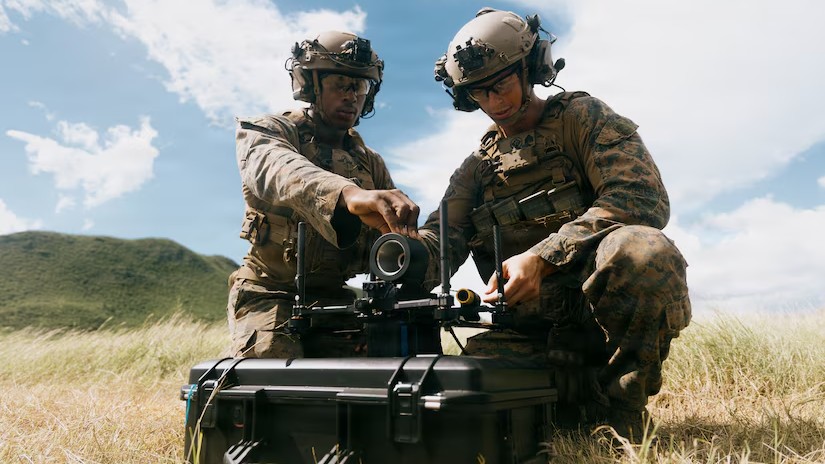
The US Marine Corps has written a career path for the drone operator. A December 2025 order created six training courses that run from a ten day basic operator course to a two day integration course for senior leaders, with a payload specialist course in between whose entire purpose is the safe arming of warheads (MARADMIN 624/25, VI). Two years ago this skill was improvised in the field. Now it has a curriculum, a certification chain, and a rank progression.
Key facts
- A December 2025 order, MARADMIN 624/25 from Training and Education Command, established six pilot courses and eight certifications for small attack drones
- The courses form a progression, basic operator, attack operator, payload specialist, instructor, and leader, and are open to Marines of any specialty rather than only aviation drone operators
- The goal is to put small drones in every infantry battalion, reconnaissance unit, and littoral combat team by late 2026
- Training runs on a hub and spoke model, a central hub for doctrine and standards feeding regional hubs that generate operators and instructors locally
From Improvised Skill to Profession
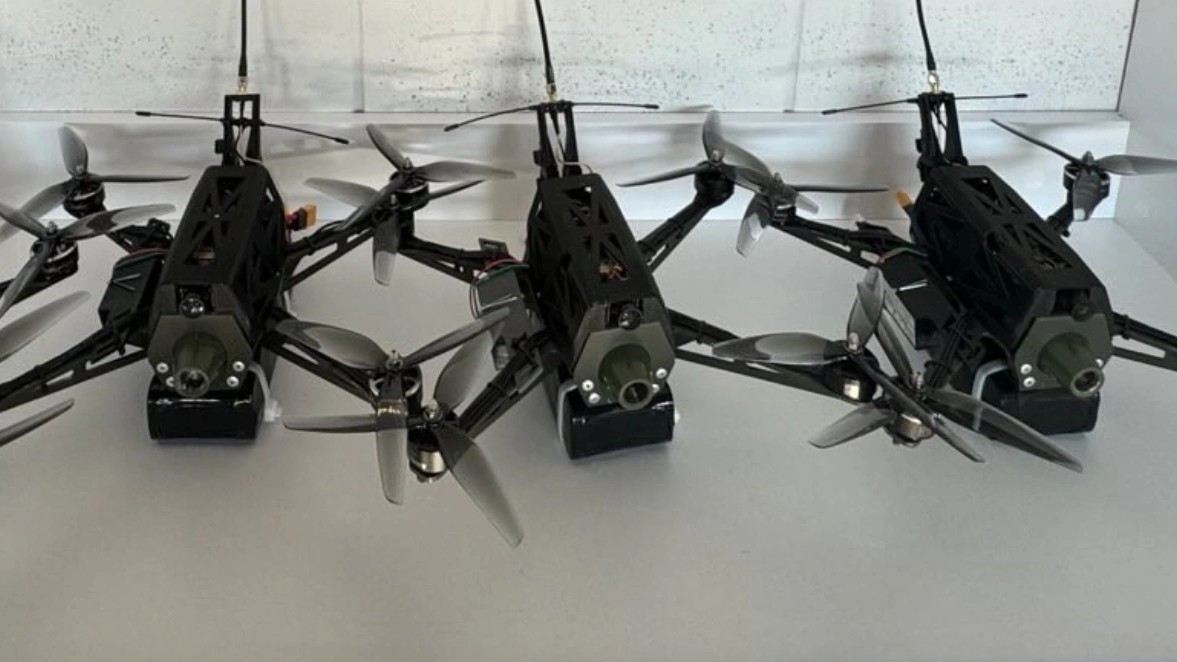
The unglamourous but essential work of creating the institutional apparatus to deploy this new capability — cheap first person view attack drones — throughout the entire force is underway. Six courses developed by Training and Education Command are running sequentially. Ten-day Basic Drone Operator Course trains students in basic flight skills, navigation and emergency procedures. Fifteen-day Attack Drone Operator Course qualifies students in the tactical application of lethal drones — including all aspects of mission planning through strike. Five-day Payload Specialist Course provides education in safe handling and arming of pre-fabricated warheads. Instructor Courses provide those responsible for validating all others. Two-day Attack Drone Leader Course provides senior leadership instruction on integrating drones into a fire support plan (MARADMIN, TECOM, VI).
Structure Suggests Doctrine
Marines are being certified to fly and fight using drones, not just aviators. Instructors are instructing the leader course; this clearly shows the doctrinal shift. Drones are no longer viewed solely as a "flying" device — but rather as an element of a fire support plan, as well as an element of a coordinated effort to assess threats and coordinate efforts with maneuver and fires (MARADMIN, VI). The Marine Corps views the small drone as combined arms fires — a system that commanders integrate with artillery, aviation, etc. — not simply a tool that individual Marines may happen to have access to. The separate payload course, focused entirely on arming warheads safely, also supports this assertion. This is a weapon system with a logistics train and safety protocols — and the Marine Corps is establishing this as such.
This is the Western world catching up to its hardware side what it has done quicker on the hardware side. The orders for the Marine Corps' drone training program began with a Secretary of Defense memo dated July 2025, as well as a Pentagon directive to produce tens of thousands, then hundreds of thousands, of lethal attack drones across the services (ExecutiveGov, VI). The Marines are developing the personnel to operate these systems.
Surviving Tensions in the Model
This is the hard part. The capability the Marine Corps is establishing as a deliberate practice became the decisive factor in Ukraine primarily due to lack of establishment. Units and volunteers established their own drone capabilities and continually adapted their drones and tactics prior to any standardized practice being established. The Marine Corps is developing a centralized organization with formalized processes of instruction, prerequisites and validation criteria. Centralization allows for scale, safety and a common operating environment throughout the force. However, it cannot allow for rapidity.
The Marines are aware of this challenge — as evidenced by their own statements. The courses are specifically stated as pilots — rapidly deployed to validate and improve upon prior to establishment of fixed programs — and the General in charge has described them as ways to establish a rapid means to achieve quality and safety (ExecutiveGov, VI). Operational units are expected to provide feedback on tactics used when employing the systems (USNI News, VI). This is an attempt to create a rapid feedback mechanism within an inherently slow institutional framework. Whether or not this will succeed remains an open question. A curriculum validated in 2026 will likely be training a drone war that has evolved beyond recognition by 2027 — unless the institutions responsible for testing and deploying new equipment can maintain a timely pipeline based upon the rate that technology evolves in the operational environments.
The Loop Underneath
This represents another layer of institutionalization in the same loop we follow everywhere. Hardware advantages are fleeting and anyone can purchase the drone. The enduring competitive advantage is a function of how quickly a military learns, adapts and retires personnel. This is exactly what the Marine Corps is attempting to deliberately engineer on its behalf. Doctrine is transitioning from combat under fire into a peacetime training enterprise located on a California firing range. The risk is that the training will reflect the previous drone war. The gamble is that a hub-and-spoke organizational model can simultaneously present a common professional baseline and decentralized authority to continue adapting at regional levels. No large institution has demonstrated that it can accomplish both at once.
What to track
- Whether the pilot courses harden into rigid programs of instruction or keep a fast refresh cycle tied to what units learn in the field.
- Whether other services and allied militaries copy the hub and spoke structure, which would mark it as the emerging Western template for drone training.
- Whether the standardised operator keeps the decentralised initiative that made drones decisive, or trades it for scale and consistency.