Finland can shelter a million people from a strike
Finland's underground network of shelters is unlike any other in Europe. Helsinki alone holds more than 5,500 shelters that can house nearly 1 million people, more than the population of the capital itself, which sits somewhere between 675,000 and 1 million. Across all of Finland there are around 50,500 shelters with room for 4.8 million people, about 85 percent of the population. It is the most complete system in Europe for protecting citizens from bombing. Since Russia's war on Ukraine made strikes against cities the norm, Finland's system has become the model studied by delegations from Ukraine, Poland, the United Kingdom, the Gulf states, and Israel, while also providing a way for people to survive. But this system does not protect what these strike campaigns are actually aimed at.
Key facts
- Helsinki holds more than 5,500 shelters with room for close to a million people, against a city population of about 675,000
- Finland has about 50,500 shelters nationwide with space for 4.8 million people, roughly 85 percent of the population, most of them reinforced concrete under individual buildings
- Hard shelters are built to withstand a 100 kiloton nuclear detonation at ground zero, and about 83 percent carry filtration against chemical, biological and radiological agents
- The shelters double as pools, gyms, car parks and metro stations in peacetime and convert within 72 hours, which keeps them maintained and cheap
What Finland created
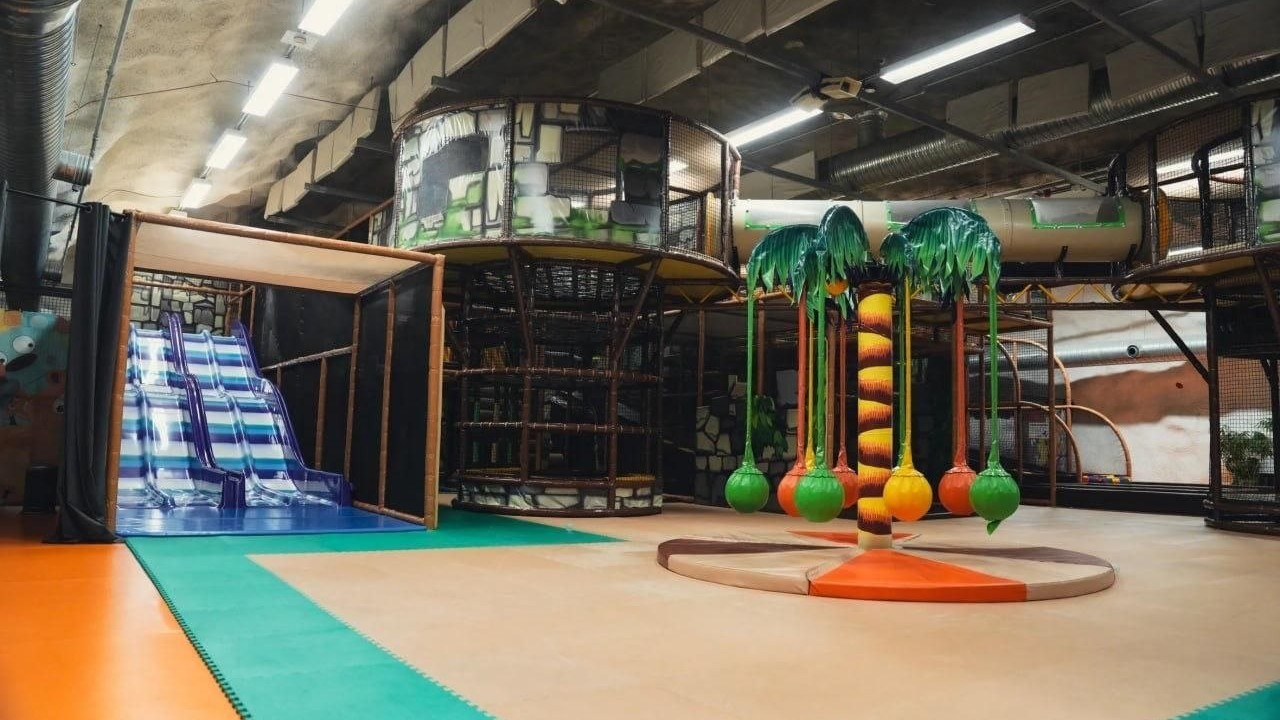
Finland began mass shelter construction after the Soviet invasion of 1939 and never stopped. Building continued through the Cold War and after it ended, while most of Western Europe let its shelters decay. Today the system is woven into the daily life of Finnish citizens. The Merihaka shelter in central Helsinki can hold 6,000 people in 15,000 square meters of bedrock 20 meters down. In peacetime it works as a sports complex with a gym, ball courts, and a playground. The Itäkeskus shelter contains the world's largest swimming hall and can clear its pools to take in 3,800 people within 72 hours. Builders must incorporate shelters into large new structures, a rule first enacted in the 1950s and extended to all new apartment blocks and public buildings by a law passed in 2025. The whole system sits inside a doctrine called comprehensive security, under which Finland also practices universal male conscription and regular civilian drills.
Why it works and how much it costs
The design solves the problem that killed everyone else's shelters. Abandoned bunkers decay over time and drain state budgets. Most countries let theirs rot after the Cold War. Finland kept its shelters alive by renting them out. A swimming hall earns money and stays maintained. The people who swim there every day already know the way in. Supplies come from citizens, not the government. Finns are expected to arrive with 72 hours of food, water, and medicine. Larger shelters run like submarines, with one third of the people resting, one third active, and one third on duty at any given time. The model has now become an export. Finnish makers of blast doors and filtration systems are seeing demand from across Europe and the Gulf, and a once niche business is turning into a strategic industry.
What a shelter cannot do
This is why it belongs in our reportage. A shelter protects people. It does not protect power plants or distribution stations or oil processing facilities or gas nodes, and those are precisely what the strike campaigns of this war have moved towards. Russia spent three winters hitting Ukraine's energy grid with cheap drones and missiles. Ukraine cut Russian oil output to multiyear lows with long range drones. Neither campaign was designed mainly to kill civilians in their homes. Both were designed to break the machines that keep a country warm, lit, fueled, and able to keep fighting. No bunker protects a transformer. Finland's network provides something real. It keeps the population alive, and with that comes the freedom to act in a crisis without fear of mass civilian casualties. That is why analysts such as Fiona Hill call it the model the West has failed to copy. But it answers only the smaller side of the strike problem.
The defender's side of the loop
We track the strike loop from the attacker's side most of the time. The cheaper drone, the faster jet, the swarm that overwhelms air defense. Civilian defense is the defender's step on the same stairway, and the war in Ukraine pulled it out of retirement across Europe. The Russian threat that put Finland's shelters back on the agenda also framed them as nuclear deterrence, a nation ready for total war. Remove the framing and the strategic point survives. A population that can survive a strike is a population that cannot be coerced by the threat of one. But the loop does not stop at the shelter door. The strike side keeps moving towards precision, towards persistence, and towards the infrastructure a sheltered population still depends on. The frontier of resilience is not just more shelters. It is infrastructure that can lose nodes and still operate. Distributed generation. Buried lines. Fast repair. Transformer stockpiles. Finland may well have the world's best answer right now for the resilience of a population. But the harder problem, hardening and distributing energy infrastructure, is being fought out in this war. No one has yet found a Merihaka for power grids.