What a Russian channel gets right, and leaves out, about the drones hitting Moscow
The post correctly stated the saturation economics. The cost of a long-range strike drone to Russia is significantly lower than the cost of a missile fired to counter it. Even lower than the cost of the system which fires the missile. Because air defense must protect a vast area of land it must dilute its force, whereas a drone can focus and overwhelm an air-defense system through a single chokepoint in a single sector. Although the majority of the hundreds of drones fired by Ukraine are destroyed on the approach, enough do slip through to destroy vulnerable targets such as refineries, oil storage tanks and open-air warehouses.
There is also supporting data from independent sources for the mass surge behind that logic. Ukrainian long-range drone launches increased from approximately 110 per month in January 2024 to more than 7,000 per month in March 2026. That represents a 500% increase in the number of launches per month in 2025 alone. For the first time ever, March 2026 saw Ukraine launch more long-range drones at Russia than Russia did at Ukraine (MiGFlug citing ISW and Reuters, VI). A drone which may cost tens of thousands can inflict damage equivalent to hundreds of millions. By April Ukraine had driven Russian crude processing to a 16-year low through 21 refinery attacks in one month (ISW and Reuters cited by MiGFlug, VI).
Additionally, the figures presented in the post’s chart check out when we could verify them. The total number of Russian launches in May, approximately 8,100, is very nearly identical to the number of launches verified by independent sources at 8,161 (Institute for Science and International Security, VI). Lastly, the candor exhibited by the author is worth noting. A Russian source admitting that the present air defense system was designed for classical threat scenarios and presently operates at its limits is more candid than any official statement emanating from Moscow.
Key facts
- On 18 June 2026 Ukraine struck the Moscow Oil Refinery for the second time in a week in one of its largest attacks on the capital of the war.
- Russian officials claimed air defence downed about 190 drones over Moscow and 555 across the country that night.
- At least 17 people were injured in the Moscow region, including two children, with some damage caused by Russia's own interceptors, and all four Moscow airports suspended flights.
- The Institute for the Study of War assessed that the rising frequency, size, and depth of Ukrainian strikes on Moscow and St Petersburg demonstrate growing vulnerabilities in Russian air defence.
What the Post Left Out
Start with Cause. The author argues that the reason for the breaches is purely due to an increasing number of Ukrainian drones. However, independent analysts read it differently. The Institute for the Study of War views the rising frequency, size, and penetration of Ukrainian strikes on Moscow and St Petersburg as proof of growing vulnerabilities in Russia’s air defenses themselves rather than just more targets in the air (ISW via CNBC, VI). Russian military bloggers made similar comments regarding these vulnerabilities after 18 June. Citing only Ukraine's sheer numbers provides Russia with a convenient excuse for why its air defense system failed.
Quantity also does not equate to mere quantity. A significant portion of the drone launches are decoy drones, inexpensive airframes devoid of any warheads, created expressly to compel Russian crew members to expend interceptors on nothing (Ukrainska Pravda, VI). This constitutes a tactic, not a headcount. In addition, both the growing range, demonstrated by a refinery being attacked 1,800 kilometers away from the border in February, and forming a swarm to concentrate forces to overwhelm a specific sector constitute tactics, not quantities. By attributing all of this to quantity the authors hide the adaptations taking place inside those quantities.
Also, the chart exaggerates slightly. Independent counts indicate that Russia averages around 150 more monthly launches than Ukraine (Ukrainska Pravda, VI), yet the authors' chart later displays Russian launches dropping to 4,700 in June while Ukraine is situated at approximately 9,200 launches; a disparity the authors never address nor explain. Additionally, the authors state "10,000" in their text while their chart depicts approximately "9,200". Small tells. Regardless, a first-reader verifies them nonetheless.
To further complicate matters for Russia there is currently nowhere to obtain air defense systems that overstated Russia's predicament. Russia is adapting. Russia has placed a fresh Pantsir S1E air defense unit at the Moscow refinery, is constructing drone shelters at its Baltic fleet base after it was struck multiple times by Ukrainian drones, and is testing new close-in systems (United24, VI). Expensive and scarce? No. Non-existent? Yes.
The Tell Is in the Solution
The most telling aspect of the post is its suggested remedy. According to the authors, the only way out of this situation is to create another wedge within a wedge. To rapidly develop and deploy inexpensive mass-interceptor drones and anti-drone turrets such as Citadel and Zubr as part of one integrated loop that incorporates detection and other kill systems since Russia's existing air defense system already functions at its limits.
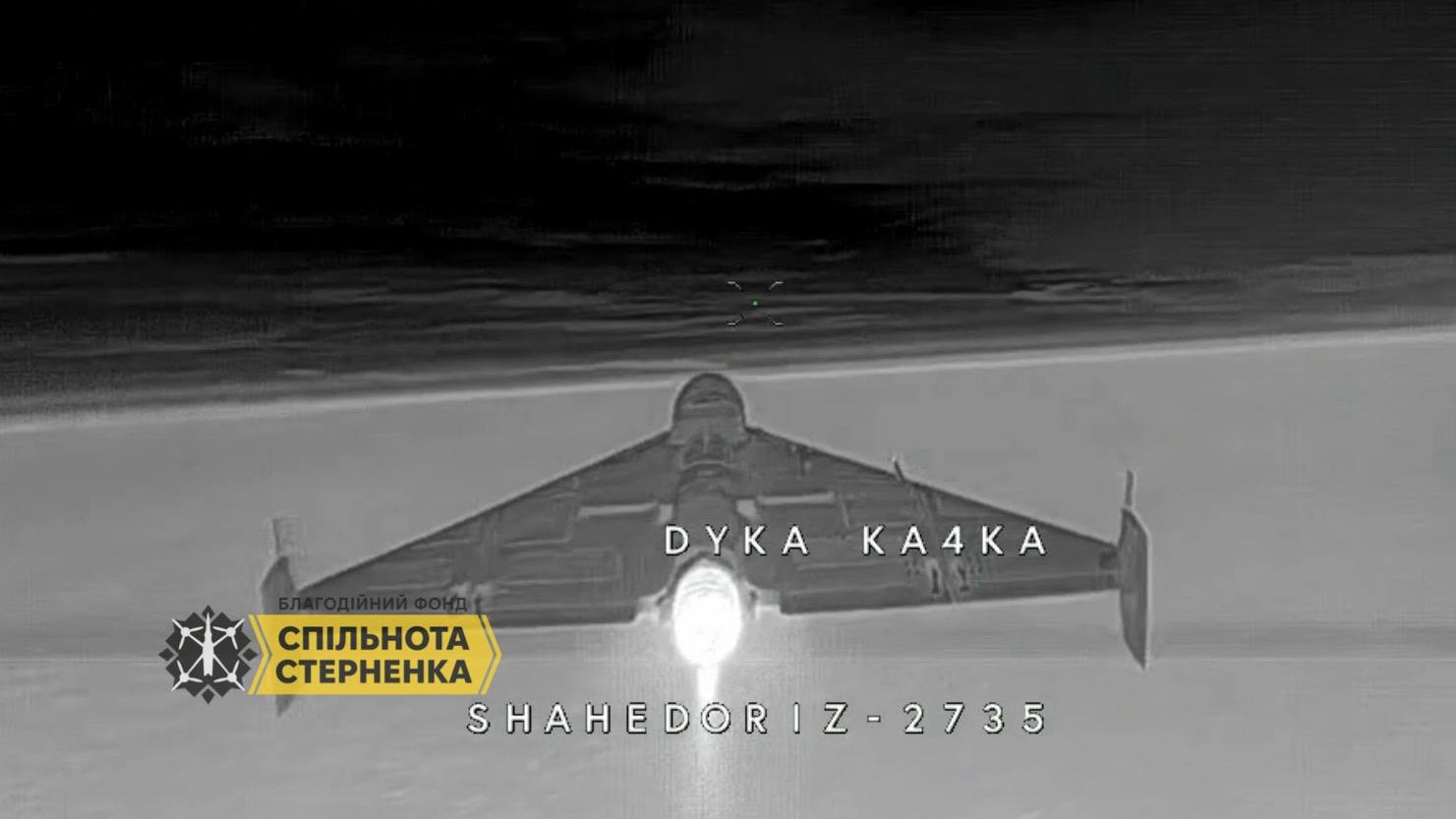
Read that again. What Russia is suggesting as its solution is essentially building the exact same mass drone-defending system that Ukraine developed as an antidote to Russia's Shaheds against Russia's own Shaheds. Mass-drones in volume using inexpensive interceptors; turrets on point defense; networks linking kills. The country that pioneered mass-drone-strike against Ukrainian cities is now recommending copying Ukraine's invention of mass-drone-defense.
Both turrets mentioned are real and small. Zubr is a Rostec system beginning delivery from January 2026, consisting of four modules of 7.62mm machineguns with its own radar, automatic detection/tracking and man-in-the-loop fire decision, and is only effective against small drones in the final few hundred meters (Defence Blog, Militarnyi, VI). Citadel consists of a 30mm gun firing programmable airburst ammunition capable of defeating fixed-wing drones up to approximately 1km distance and multirotor aircraft up to approximately 800m distance (Army Recognition and TASS, VI & SS). Both are terminal point-defense systems. Each guards one location; not an entire nation. Russian mil-bloggers noted that Zubr would require a massive deployment in order to be relevant given its extremely limited range (Defense Express, SS). That is the same scalability barrier identified in classical air-defense, shifted one level down and still unaddressed.
The Mirror
This reflects the loop we have followed -- viewed from the opposite side. Over Ukraine Russia's cheap Shaheds prompted Ukraine to develop cheap interceptors, and Russia responded with developing a high-speed fighter Geran-4 intended to defeat those interceptors. Over Russia Ukraine's cheap long-range drones are now prompting Russia towards developing cheap interceptors and turrets. Same economics; opposite direction.
Similarly, during the 2026 Iran war U.S. allies and the United States hit the identical wall. They were able to down most incoming drones however sufficient numbers of leakers broke through to reach their targets destroying several key installations in the process; and exhausted over 800 Patriot missiles defending against those incoming drones in three days (Military Times, VI). The post compares this directly; it applies equally well. Cheap mass-strike against expensive point-defense is not unique to either Russia or Ukraine; it defines this conflict; it spreads.
What to Track
Russia's ability to execute upon the post's proposed solution; i.e., deploying sufficient numbers of mass-interceptors and turrets into a networked loop. Whether Ukraine sustains its launch rate as Russia fortifies its higher-value assets. The scorecard for this conflict will be measured by refinery production and availability of fuel supplies — not percentage of drones intercepted. The gap between successful interceptions and leaker drones. As previously discussed high successful interception rates will continue to be advertised; however it is the number of leakers that penetrate through air-defense systems successfully to hit critical infrastructure that determines if this campaign succeeds or fails.