25,000 Robots in Six Months: Ukraine Runs the FPV Playbook on the Ground
Key facts
- 25,000 in six months. Ukraine's MOD targets 25,000 UGVs contracted in H1 2026 - double all of 2025. By April, 19 contracts worth 11 bln UAH (~$260M) were signed.
- 62 → 1,028 in five months. The DOT-Chain Defence marketplace moved 62 UGVs in all of 2025; by May 2026 it had delivered 1,028 worth 487 mln UAH, with 33 models listed.
- ~$11,000 per robot. Average marketplace price derived from MOD figures (487 mln UAH / 1,028 units); individual prices vary widely by class.
- 50,000+ missions since January. UGVs ran 7,500+ logistics/evac missions in January 2026 alone and over 50,000 by early June, climbing monthly. Stated goal: 100% of front-line logistics unmanned.
- The FPV curve, two years behind. FPV output ran ~600K (2023, estimates 300-800K) → 2.2M (2024, Zelensky) → claimed 3x in 2025 → 8M+/year capacity in 2026. UGVs are tracing the same playbook: codify fast, marketplace, operator schools, double the target.
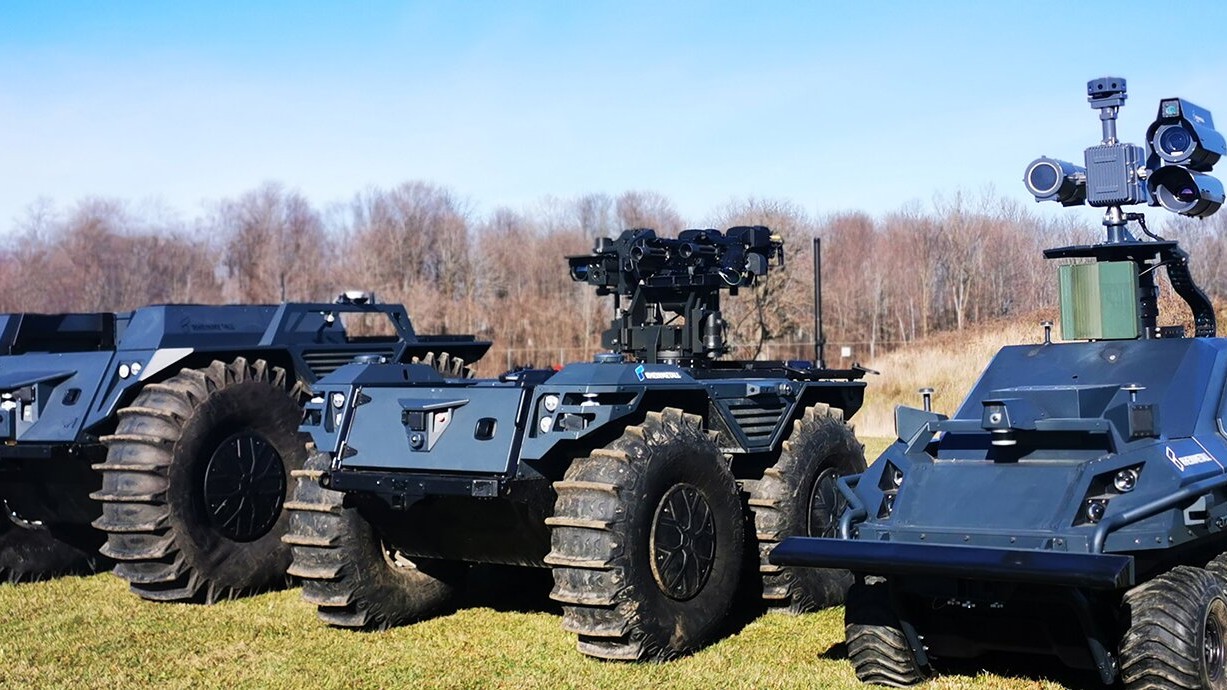
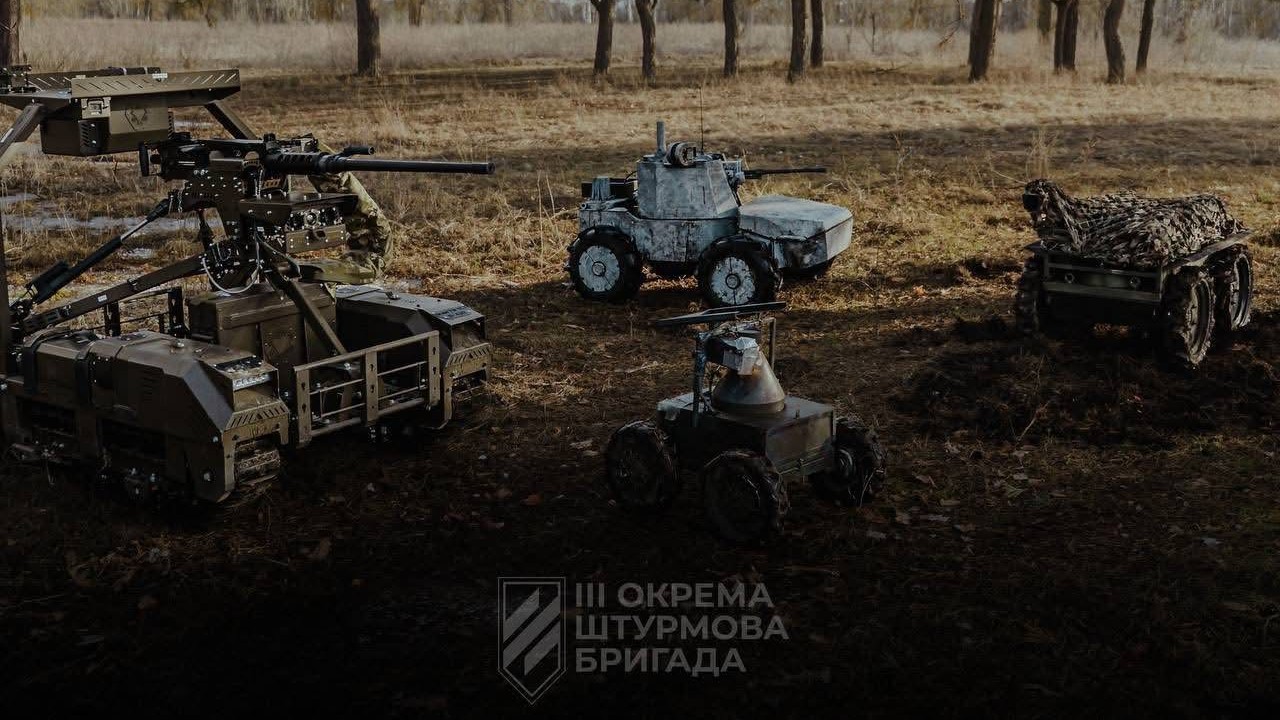
25,000 ground robots in six months - twice as many as in all of 2025. That's Ukraine's Defense Ministry procurement target for the first half of 2026, announced in April. The news peg is smaller and more telling: in June, the ministry added yet another machine to the official catalog - a 60-kilogram demining robot that two soldiers can lift out of a pickup truck. A machine like that entering the catalog is not an event. The rate at which machines like that are entering it is.
The curve, in numbers
Ukraine's uncrewed ground vehicle (UGV) sector is climbing a curve The Loop has seen before.
In 2024, the Defense Ministry signed roughly 300 million UAH (about $7 million) in UGV contracts over ten months and codified just over ten domestic models. In 2025, procurement jumped to roughly 12,000-12,500 units - the ministry says its 2026 half-year target of 25,000 is double the full 2025 figure - and deliveries exceeded 100 percent of the General Staff's order, per then-Defense Minister Shmyhal in January 2026. Seven UGV operator schools were certified by November 2025. (One discrepancy worth flagging: an August 2025 industry review cited a 15,000-unit annual plan; the implied actual of ~12,500 suggests the year came in under it. We treat the MOD's "double 2025" arithmetic as the anchor.)
Now the first half of 2026: a 25,000-unit contracting target, 19 contracts worth 11 billion UAH (roughly $260 million) already signed by April, and a marketplace dynamic doing the quiet work. DOT-Chain Defence - the ministry's "weapons marketplace" where units order directly - listed 33 UGV models by May 2026 and had delivered 1,028 robots worth 487 million UAH. That works out to roughly 470,000 UAH, or about $11,000, per robot (our derived average across marketplace orders; individual prices vary widely by class). For scale: the same marketplace moved just 62 UGVs in all of 2025. A seventeen-fold jump in five months.
If the shape looks familiar, it should. FPV production ran the same curve two years earlier: from roughly 600,000 units in 2023 (estimates range from 300,000 to 800,000), to 2.2 million in 2024 per President Zelensky, to a claimed tripling in 2025, to a stated capacity above 8 million per year by 2026 with more than 160 companies in the segment. The playbook is identical and explicit: codify many models fast, open a marketplace so units vote with orders, unblock contracting rules, certify operator schools, then double the target every cycle.
Why the ground curve is flatter - and why that's the point
The numbers differ by two orders of magnitude, and the physics explains why. An FPV gets gravity, line-of-sight radio, and a one-way mission. A ground robot gets mud, treelines, trenches - and an enemy electronic warfare environment it must survive for hours, not minutes. That's visible in the product specs: Bizon-L, codified earlier this year, carries six communication channels, including LTE and Starlink, specifically to keep control under jamming. It's visible in the price: $11,000 average against the few hundred dollars of an FPV. And it's visible in the missions: a UGV is not a munition but a vehicle that must come back.
So the ground curve will be measured in tens of thousands, not millions. The relevant metric isn't units anyway - it's missions, and who isn't performing them. From January to early June 2026, UGVs ran more than 50,000 logistics and evacuation missions, per the ministry - up from 7,500 in January alone, climbing month over month. Defense Minister Fedorov's stated goal is to move 100 percent of front-line logistics to uncrewed platforms. Every one of those missions is a supply run or casualty evacuation that no longer requires a human to drive the most dangerous kilometers of the war.
The newest entry in the catalog shows where it goes next: a metal detector sweeping a 139-centimeter swath down to 60 centimeters' depth, remote calibration, and a second job as a mule - 70 kilograms carried, 120 towed. Demining is statistically among the war's deadliest work; codifying a robot for it is the procurement system saying the quiet part out loud: the catalog now prices human exposure, not just firepower.
Where this sits in the loop
The UGV boom is itself an adaptation. Cheap drones on both sides widened the kill zone to 10-20 kilometers behind the line; human logistics became the soft target of the war. Ground robots are the counter-move. The counter-counter is already legible in the specs - six-channel comms against jamming - and the next turn is predictable: enemy FPVs hunting $11,000 robots is an exchange Russia will happily take, which pushes the sector toward the same attrition economics that FPVs imposed on armor. Cheap versus cheap, on the ground this time.
What to watch: whether the 25,000 contracted convert into delivered units by year's end (contracting targets and field deliveries are different curves); whether the marketplace share keeps compounding (62 → 1,028 → ?); and whether dedicated anti-UGV tactics - mines re-aimed at robots, FPV ambushes on supply routes - start showing up in both sides' footage. That last one will mark the loop closing.