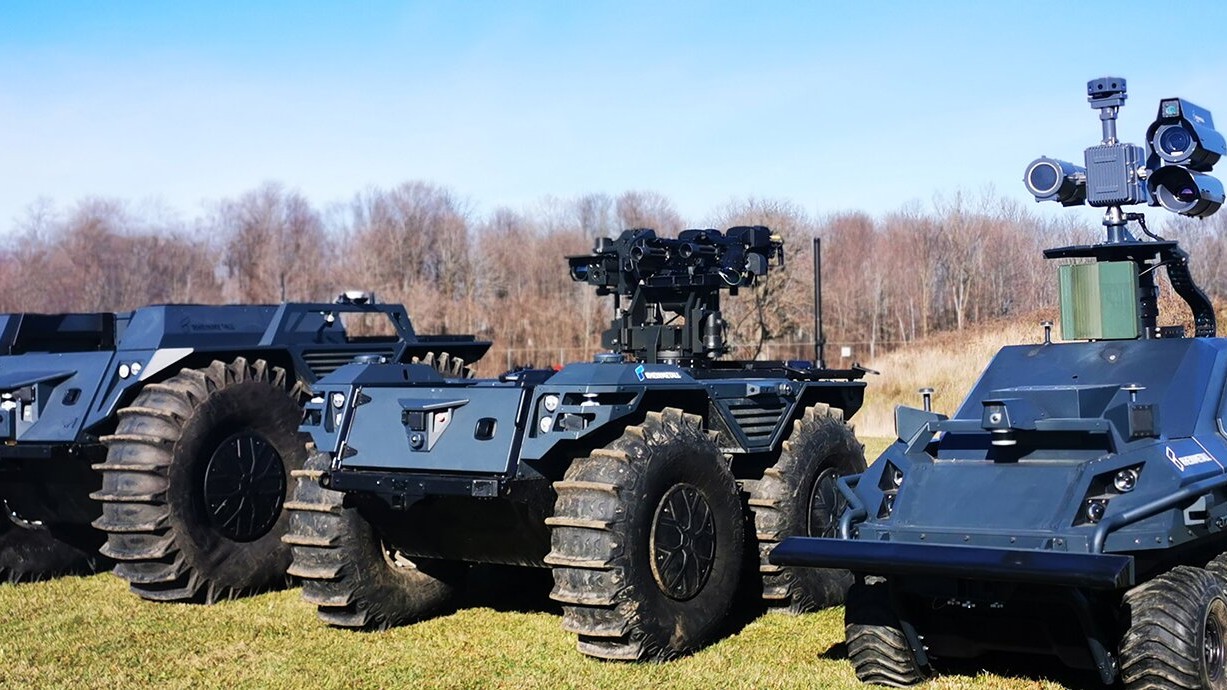
Russia Is Arming the Mi-28NM Against FPV Drones. The Arithmetic Still Favors the Drone.
A radio controlled FPV that can kill an attack helicopter costs roughly $400 to $1,000 (defence-blog, July 2025; Inside Unmanned Systems, March 2026). The Mi-28NM those drones now threaten costs an estimated $15 to $18 million across open sources, with the export Mi-28NE quoted at $18 to $20 million (Defence Security Asia, January 2026; AeroCorner, March 2026). That gap is the whole story behind the new sensors that appeared on Russia's most advanced attack helicopter.
Key facts
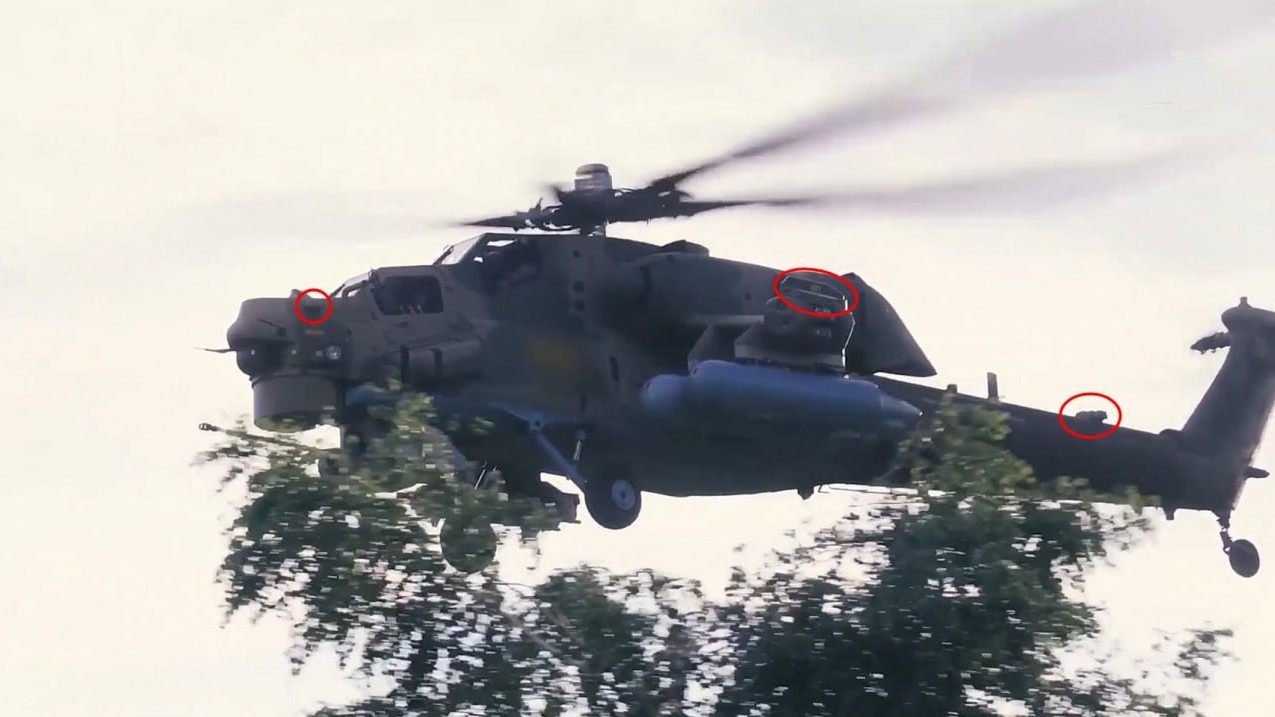
- New antenna housings appeared on the nose, stub wing tips, and tail boom of the Mi-28NM in Russian MoD footage.
- Russian milblogs reposting Zvezda footage describe the additions as microwave band sensors intended against Ukrainian FPV drones, and speculate they are a new system or a modified complex rather than the known anti FPV system Multik. June 2026.
- Ukrainian FPV drones have struck Mi-28 helicopters in flight, including a reported hit on the tail rotor over the Kursk region in August 2024.
- The US Army awarded BAE Systems its Soft Kill Active Protection System program of record on 27 May 2026, built around the ROOK soft kill electronic system, marketed with an infinite magazine.
What changed on the airframe
In recently released Russian Ministry of Defence footage, new antenna housings turned up on the nose, the stub wing tips, and the tail boom of the Mi-28NM. Israeli analyst Guy Plopsky, who tracks Russian military aviation, read them as probable electronic countermeasure elements, most likely jamming gear for counter drone use, while not ruling out detection (defence-blog, June 2026). Russian milblogs reposting Zvezda footage describe the additions as microwave band sensors and tie them to defence against Ukrainian FPV drones. The two source streams, one independent and one adversary, converge on the same reading. This is a counter drone fit.
It is not the only one. In February 2026 Rostec showed a programmable 30×165 mm airburst round for the 2A42 cannon, designed to defeat small drones and loitering munitions and intended for the Mi-28NM and the Ka-52M (Army Recognition, February 2026). Read together, the two additions turn the helicopter itself into a small mobile air defence node. Soft effect on the control link, hard effect from the gun.
The need is real and documented. Ukrainian FPV drones have struck Mi-28s in flight, including a hit on the tail rotor over the Kursk region in August 2024 (Army Recognition). A helicopter working low and slow near the line is now inside the envelope of a weapon that costs less than a single one of its missiles.
What it buys and what it does not
Against a moving, manoeuvring aircraft the practical drone is one a pilot flies on a live radio link, watching the video feed down to the final approach. That is exactly what radio electronic warfare is built to break. Cut the control or the video channel and the run is spoiled before it lands. So this fit is well matched to the threat it actually faces, and that is worth saying plainly rather than dismissing.
The first limit is autonomy. A drone that locks on and flies its terminal approach with onboard processing, no live link in the last seconds, gives the jammer nothing to hold. The same pressure that pushed ground attack drones toward pre programmed and inertial guidance is now reaching the airframes that hunt low flying aircraft, because jamming does not work on a drone that is not listening (euro-sd, May 2026). As that capability spreads, the value of a radio jammer falls with it.
The second limit is mass. A jammer engages what it can see and reach in the moment. Numbers arriving together beat it.
The third limit is arithmetic, and no antenna fixes it. You cannot bolt enough protection onto an eight figure airframe to make the exchange favourable against a weapon that costs four figures and comes in volume. Suppose the new fit stops nine of ten radio FPV drones. The tenth still trades a sub $1,000 drone for an $18 million aircraft and its crew. The helicopter also still has to survive the missiles and man portable threats it was already carrying defences against, and every new pod adds weight, drag, and cost to the thing the drone is trying to bring down.
The wider frame
This is not a Russia only move, and that is the point worth holding for an international reader. The US Army awarded BAE Systems its Soft Kill Active Protection System program on 27 May 2026, built around the ROOK system and sold on exactly this logic, a non kinetic electronic layer with what BAE calls an infinite magazine. Both sides of the war, and the West behind them, are now spending serious money to push the cost exchange back toward the defender. The platforms differ. The trap is identical, and so is the limit, because an electronic layer answers the drones that still rely on a link and not the ones learning to fly without one.
There is a doctrine transfer worth naming. Protecting aircraft from incoming weapons is old logic. Russia already fields the L-370 Vitebsk suite, an infrared countermeasure built against man portable missiles (The Aviationist, 2020). The new sensors are described as microwave band, which is radio, not infrared, which is why the Russian channel's own guess of a Vitebsk modernisation sits awkwardly against its own observation. The self protection idea is being carried across to a new threat class, the cheap drone, in a different part of the spectrum.
What to track next
Watch whether the electronic warfare fit spreads across the fleet or stays on a handful of airframes. Fleet wide integration is a procurement signal that Russia treats this as standard, not a trial.
Watch the autonomous share of the drones that engage helicopters. A radio jammer answers a radio drone. If terminal autonomy climbs among the airframes used against aircraft, the jammer's value erodes and the gun round becomes the part that matters.
Watch whether the 30×165 mm airburst round reaches scale. That is the hard kill half, the answer to a drone that is not listening, and its production tempo will say more than any single sensor.
Where we are in the loop
The loop has reached the point where platform level counter drone protection is becoming mandatory for any crewed aircraft that operates near the front. The radio FPV threat is real and a radio jammer is a reasonable answer to it. What the fit cannot do is close the cost gap, and the next adaptation is already visible, terminal autonomy that flies the last seconds without a link to break. The Mi-28NM fit is one event in a continuing subscription of adaptation. It buys time against the radio drone of today. It does not close the arithmetic that made the drone worth building.