Rheinmetall bought its way into heavy ground robots. Ukraine is fighting with cheap ones
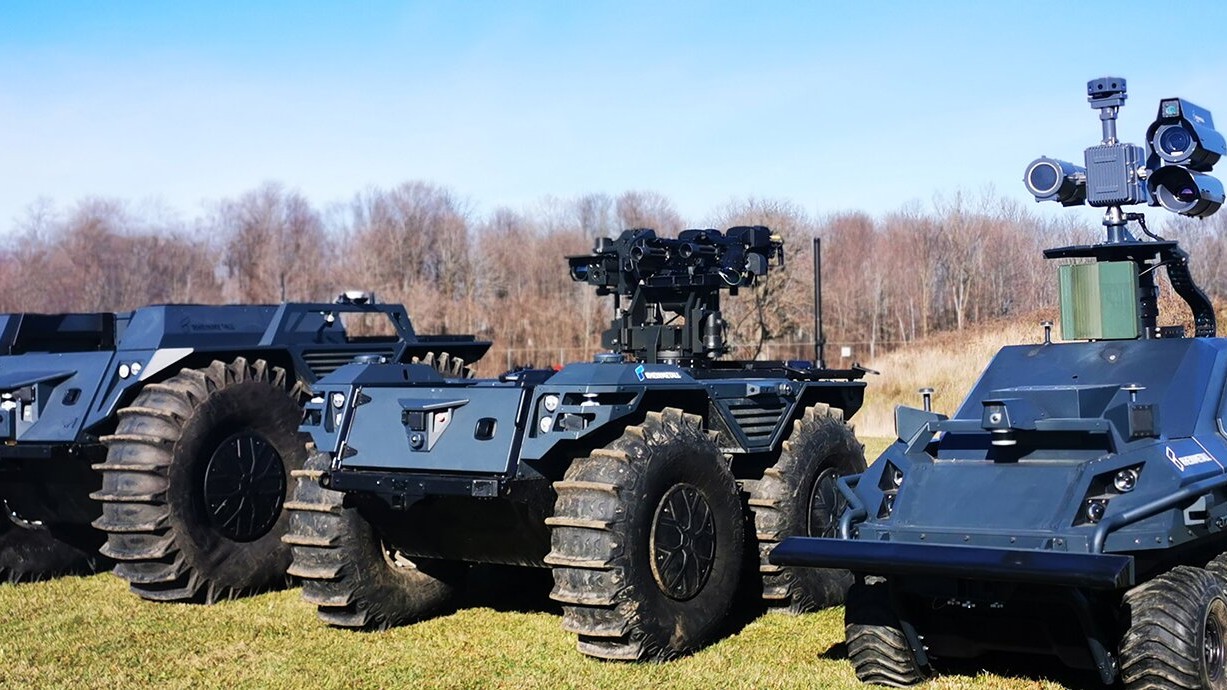
On 01 July 2026 Rheinmetall acquired DOK-ING, the Croatian developer of unmanned robotic platforms, for $51% (the acquisition price was undisclosed) and named the entity Rheinmetall Unmanned Vehicles (VI) (Rheinmetall and DOK-ING, VI). DOK-ING has sold about 500 unmanned robotic platforms to customers in more than forty countries since 1991, and recently developed a heavy-duty robot, the Komodo, which weighs more than 8.5 tons (Rheinmetall, VI).
This is a major industrial investment in ground-based robots. This is also a bet against the type of low-cost, disposable, ground-based robot that is currently driving the demand. The battlefield in Ukraine is dominated by low-cost, inexpensive ground-based robots that cost between $10,000 and $30,000 each (Washington Technology, SS), while Rheinmetall invested in a company that builds at the higher end of this product category.
Key facts
- Rheinmetall completed the acquisition of 51 percent of DOK-ING on 1 July 2026 and renamed it Rheinmetall Unmanned Vehicles.
- The purchase price was not disclosed.
- Founder Vjekoslav Majetić retains 49 percent, the headquarters stays in Zagreb, and the existing management remains.
- DOK-ING specialises in unmanned mine clearance, hazardous environment work, CBRN response, and critical infrastructure protection, and its demining machines are in use in Ukraine, with MV-4 and MV-10 vehicles assembled there.
The Deal in Numbers
Rheinmetall purchased 51% of DOK-ING’s shares and assumed management control. The founder, Vjekoslav Majetić retains ownership of 49% of the shares, the headquarters will remain in Zagreb and the current employees will continue working under their previous leadership (Rheinmetall and DOK-ING, VI). The parties agreed upon the terms of the agreement on 04 MAR 2026 and executed the closing on 01 JUL 2026 following regulatory approvals. Rheinmetall has chosen to locate its new center of excellence for heavy uncrewed systems in Croatia – an EU and NATO country – thereby establishing itself within the customer base (Rheinmetall, VI).
Rheinmetall is a significant player. Rheinmetall AG was established in 1889. In 2024, the company generated revenues of approximately €9.8 Bn. with a workforce of approximately 44K. The company is listed on the DAX 40 Index (Rheinmetall, VI).
DOK-ING is specialized. DOK-ING’s primary focus areas were unmanned mine-clearance and operations in hazardous environments including demining; chemical and radiological response and protection of critical infrastructure. DOK-ING’s demining equipment is being used in Ukraine, and components for its MV-4 and MV-10 vehicles are manufactured in-country (Rheinmetall and Mezha, VI and SS). The first collaboration between Rheinmetall and DOK-ING is represented by the Komodo. Rheinmetall plans to add various modules to enable direct and indirect fire capabilities; mine clearing/mining; reconnaissance; and logistics (Rheinmetall, VI).
What Is Being Purchased
Ground robotics is evolving rapidly. The numbers illustrate the speed of development. According to estimates, Ukraine deployed approximately 15K unmanned ground vehicles in 2025. It exceeded its own procurement targets by more than 100%, and plans to deploy close to 25K unmanned ground vehicles in the first six months of 2026. As reported in March 2026 Ukrainian forces carried out over 9K ground robotic mission in a single month. The Ministry of Defence has stated that it intends to move 100% of frontline logistics to autonomous systems (Defense News, VI). At the time of writing it is estimated that up to 90% of deliveries made into Pokrovsk were performed using unmanned systems rather than trucks (BBC via RobotToday, VI). In addition to transportation, unmanned vehicles increasingly serve as carriers for additional payloads such as electronic warfare equipment; radar; missiles; and mortars making each vehicle capable of performing multiple functions (United24, VI and SS).
The explanation is dire and specific. Drone technology providing First Person View (FPV) images and fiber optic cameras have enabled a corridor extending 10–15 km behind the front lines to become a 'kill zone' where a crewed resupply vehicle has a 70-90% chance of sustaining fatal injuries or serious wounds (Foreign Policy, RobotToday, VI and SS). Consequently, the unmanned robot takes the resupply route. Therefore, the demand Rheinmetall expects represents a very tangible reality supported by causalities.
Tension in Bet
This is where things get interesting. Ground-based robots employed by Ukraine are relatively inexpensive - priced between $10,000 and $30,000 per unit - and viewed as disposable (Washington Technology, SS). Rheinmetall’s Komodo is a heavy modular platform designed to transport >8.5 Tons. Thusly it occupies the extreme end of this product class. Larger armed robots provide larger profiles and therefore larger targets for enemy detection systems on a battlefield saturated with drones. Ukrainian operators report that the larger the payload mounted on a ground robot, the greater visibility the robot receives and the more difficult it becomes to camouflage (Foreign Policy, VI). NATO analysts derive a different lesson from what has transpired in Ukraine — namely, that it does not merely matter how many robots an army purchases but rather how those robots are designed so they can be sacrificed in a short period of time; additionally that military organizations should plan logistics and defensive counter-drone measures for when those losses occur regularly (Army Recognition, VI).
Rheinmetall is investing heavily in areas of the battlefield where historically inexpensive solutions have prevailed. While this is not inherently incorrect, it remains a risk. Exquisite platforms often carry fire support/ engineering payloads that cannot be transported by less costly vehicles; nevertheless armies procure both high-end and mass-produced products. However this is a bet — and evidence from ongoing conflict indicates otherwise.
The Prize Continuously Eludes
The ultimate high-value objective in the transaction is the armed wingman — an unmanned system intended to operate directly alongside main battle tanks such as Rheinmetall’s Panther KF51 and Infantry Fighting Vehicles; furthermore, it will operate with Rheinmetall’s Büffel recovery vehicle and Kodiak engineer vehicle (Rheinmetall, VI). The armed wingman conceptually is also the most resistant area of ground robotics to date. The U.S. Army terminated its flagship Robotic Combat Vehicle program after numerous years of development involving substantial sums of money; moreover, it now plans to restart (RobotToday, SS). The land environment is particularly challenging to automate; terrain navigation poses particular challenges relative to air; and jam-proof requirements present even greater challenges relative to sea (RobotToday, analysis). Simultaneously battery-life limitations, terrain navigation issues masking large signatures — along with lethal-autonomy limitations — challenge development of this technology; thus far Ukrainian commanders continue to position humans in decision loops for lethal engagements due to unwillingness to permit robots to autonomously select targets proximate to civilian populations (Washington Technology, VI).
Logistics/demining represent mature applications for ground-based robotics. Demining/logistics represent dull, dirty, dangerous tasks that DOK-ING has performed for nearly three decades. Additionally robots perform well in these areas. Conversely the Armed Wingman represents an emerging frontier application — it has a graveyard of failed programs behind it.
What To Track
whether first Komodo-based systems are brought into series-production/real-deployment status or remain demonstrator systems similar to most armed ground robotics programs. Whether European heavy-exquisite bets converge with Ukraine-proven cheap-attributable models or diverge into separate classes of vehicles for separate missions. first documentation of engagement between Ukrainian and Russian ground robots — expected by Ukrainian analysts — marking the transition of the ground-loop into direct combat (Washington Technology, SS).