One Source, One Threshold: What We Actually Know About the First Autonomous Kill
Key facts
- This is a single-source claim, not a confirmation. Everything traces to one person - Ukrainian defense-industry figure Alexander Kokhanovskyy - who by his own account was not present at the test. Ukraine's MOD did not confirm or deny it. No second source has surfaced.
- There is no direct evidence of the kill. The drones transmitted no video and were not recorded. The deaths were attributed to autonomous action afterward, by inference from a separate piloted-drone reconnaissance flight - not observed.
- The account, as told. Around 2024, near Bakhmut and Chasiv Yar, an unnamed unit launched 10 quadcopters programmed to fly 3-5 km, then enter an autonomous "Terminator mode" with no human link. Reported result: a couple of Russian soldiers killed, one truck destroyed.
- The most verifiable element is the restraint, not the kill. Multiple parties confirm Ukraine's rules prohibit fully autonomous lethal targeting in the final stage - a human must verify. Kokhanovskyy says the project halted because of those rules. A serving officer in the 21st Unmanned Systems Regiment says his units always keep a human in the loop.
- The teller is not disinterested. The disclosure came at an embassy press event, from someone now building autonomous interceptor drones who said he'd prefer to operate without the human-verification rule. The capability claim is sturdier than the specific-kill claim - and the durable finding is that policy, not technology, is what reportedly held it back.
One man, speaking at an embassy press event, who was not present at the event he described. That is the entire evidentiary basis for a claim now circulating worldwide as settled fact: that fully autonomous drones, with no human in the loop, killed human soldiers for the first time. The claim may well be true. But the gap between "a senior industry figure says it happened" and "it is confirmed to have happened" is exactly where this Field Report lives - because on a threshold this consequential, how firmly we know matters as much as what is claimed.
What was claimed
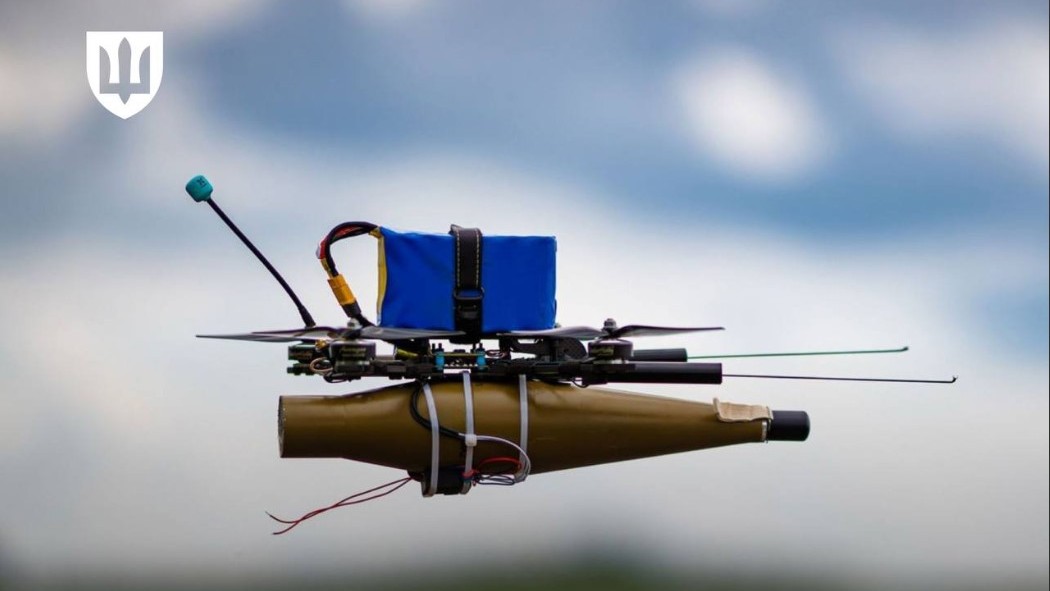
On June 10, 2026, New Scientist published an interview with Alexander Kokhanovskyy, a senior figure in Ukraine's defense industry, conducted at a press event hosted by the Ukrainian embassy. His account, reported consistently across the outlets that picked it up: around 2024, near Bakhmut and Chasiv Yar during a Ukrainian counteroffensive, an unnamed military unit launched ten quadcopter drones. They were programmed to fly three to five kilometers toward the front line over roughly ten minutes, then switch into an autonomous "Terminator mode" in which an onboard AI searched for and engaged targets with no human connection - no video feed, no ability to intervene, no abort.
In his words, the drones operated with total independence. The reported result: a couple of Russian soldiers killed and a truck destroyed. Because the drones transmitted nothing during the mission, human-piloted drones were sent over the area afterward to check, and from that the conclusion was drawn that the autonomous machines had done the killing.
That is the claim. It deserves to be taken seriously. It also deserves to be read precisely.
What is actually established - and what isn't
Strip the account to its load-bearing facts and the structure is thinner than the headlines suggest.
It is single-source. Every detail traces to one person. Kokhanovskyy supplied the technology but, by his own statement, was not present at the test; he is relaying it. The Ukrainian Ministry of Defence did not respond to questions about the test or the legal position. No second participant, no unit, no independent confirmation has surfaced.
There is no direct evidence of the kill itself. By the account's own logic, nothing watched the drones work - no feed, no recording. The attribution of the deaths to autonomous action is an after-the-fact inference from a separate reconnaissance flight, not an observation of the event. That does not make it false; it makes it inferred rather than documented.
The timeline is retrospective and approximate. The test is placed "around two years ago" - roughly 2024 - and disclosed only now. The two-year gap matters: details soften, and a 2026 telling of a 2024 event is memory, not record.
What is more solid is the surrounding context, and it cuts in an interesting direction. Multiple parties confirm that Ukraine's current rules prohibit fully autonomous lethal targeting in the final stage of an engagement - a human must verify before the strike. Kokhanovskyy confirms the Terminator project did not progress, attributing the halt to those rules. A serving officer in the 21st Separate Unmanned Systems Regiment, unaware of the test, told New Scientist his units use semi-autonomous systems but always keep a human in the loop. So the most verifiable elements of the story are not the kill - they are the constraint around it.
Why the distinction is the story
This is not pedantry. The difference between "confirmed first autonomous kill" and "uncorroborated account of one" shapes everything downstream - the legal debate, the diplomatic urgency, the precedent.
Consider what the precise version actually establishes. Not that machines have reliably crossed into autonomous killing - one inferred, unrecorded, two-year-old test by one account does not establish reliability. What it establishes is that the capability is claimed to have been built and used, and that the only thing reported to have stopped its wider use was policy, not technology. That is the genuinely significant finding, and it survives even heavy discounting of the specifics: a builder says the line can be crossed and was, and that rules - not feasibility - hold it back.
The capability claim and the kill claim are separable, and the capability claim is the sturdier of the two. You do not need to accept that two specific soldiers died to autonomous AI near Bakhmut in 2024 to take seriously that systems of this kind exist and that their restraint is a choice. The headline emphasizes the deaths; the durable lede is the choice.
The honest reading of motive and framing
Context that belongs in any careful account: the disclosure came at an embassy press event, from someone who now runs a company building autonomous interceptor drones and who said plainly he would prefer to operate without the human-verification restriction. None of that makes the account untrue. All of it is relevant to how a reader should weight it. A person with a commercial and doctrinal interest in loosening autonomy rules, describing a successful autonomous operation whose specifics cannot be checked, is giving testimony that is both potentially historic and not disinterested. Both things hold at once.
This is also why the international reaction matters as a separate datapoint. Ethicists quoted in the coverage called killing-by-AI a theft of dignity from the killed and of responsibility from the killer; a RUSI analyst said the episode does not prove autonomous weapons are unregulatable but does show the discussion is urgent and that the technology will not wait. Those reactions are real and on the record, regardless of whether the specific 2024 test happened exactly as described. The claim has already done work in the world.
Where this sits in the loop
The autonomy threshold is the loop's deepest turn: not a new sensor or a cheaper munition, but the removal of the human decision itself. The pressure pushing toward it is the same one tracked across every other Loop story - saturation. When attacks come faster and in greater number than humans can authorize responses, the temptation is to delegate the trigger, and electronic warfare adds a second push: a jammed drone that has lost its link can either abort or be pre-authorized to finish on its own. The Terminator account is one report of that second path being taken.
What the same coverage suggests as a counterweight is notable: at least one analyst concluded the episode shows it is better, even on grounds of pure military effectiveness, to keep humans in the loop - a drone you cannot see and cannot recall is a drone that can kill the wrong thing with no one able to stop it. The argument against full autonomy here is not only ethical; it is operational. That is the loop's open question, not a settled answer.
What to watch
Three indicators. First, corroboration: whether any second source - another participant, a unit, an official acknowledgment - ever substantiates the 2024 test, or whether it remains a single account. Second, the rules: whether Ukraine's prohibition on fully autonomous final-stage targeting holds or is "flexed," which officials at the same event were reported to be discussing with industry. Third, the systems actually shipping: whether fielded interceptors - the kind built to stop Shahids at machine speed - keep the human verification step or quietly drop it under saturation, the point at which a claimed one-off becomes standing practice.