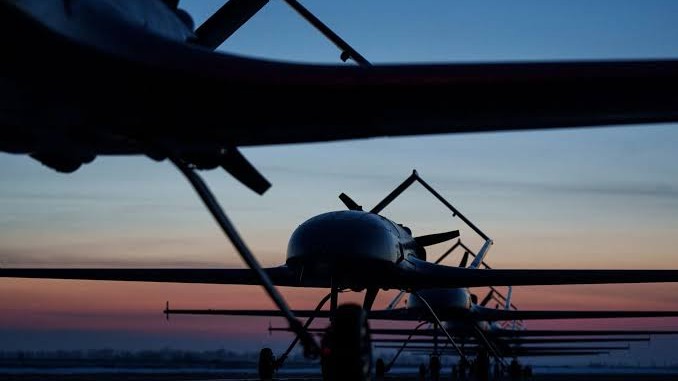
When the Drone Boats Started Shooting Down Jets
Key facts
- A world first. On May 2, 2025, Ukrainian naval drones shot down two Russian Su-30 fighters over the Black Sea — the first time in history a sea drone destroyed a manned combat aircraft.
- Cheap boat, expensive jet. Each Su-30 is valued at roughly $50 million; the drone boat that killed it costs a tiny fraction of that.
- The hunter became the hunted. Russia had been sending aircraft to hunt Ukraine's sea drones — so Ukraine armed the drones to shoot back, effectively giving them an air-defense capability.
- A staged progression, not a fluke. Sea-drone air kills climbed the ladder: two Mi-8 helicopters on Dec 31, 2024, then the Su-30 jets in May 2025.
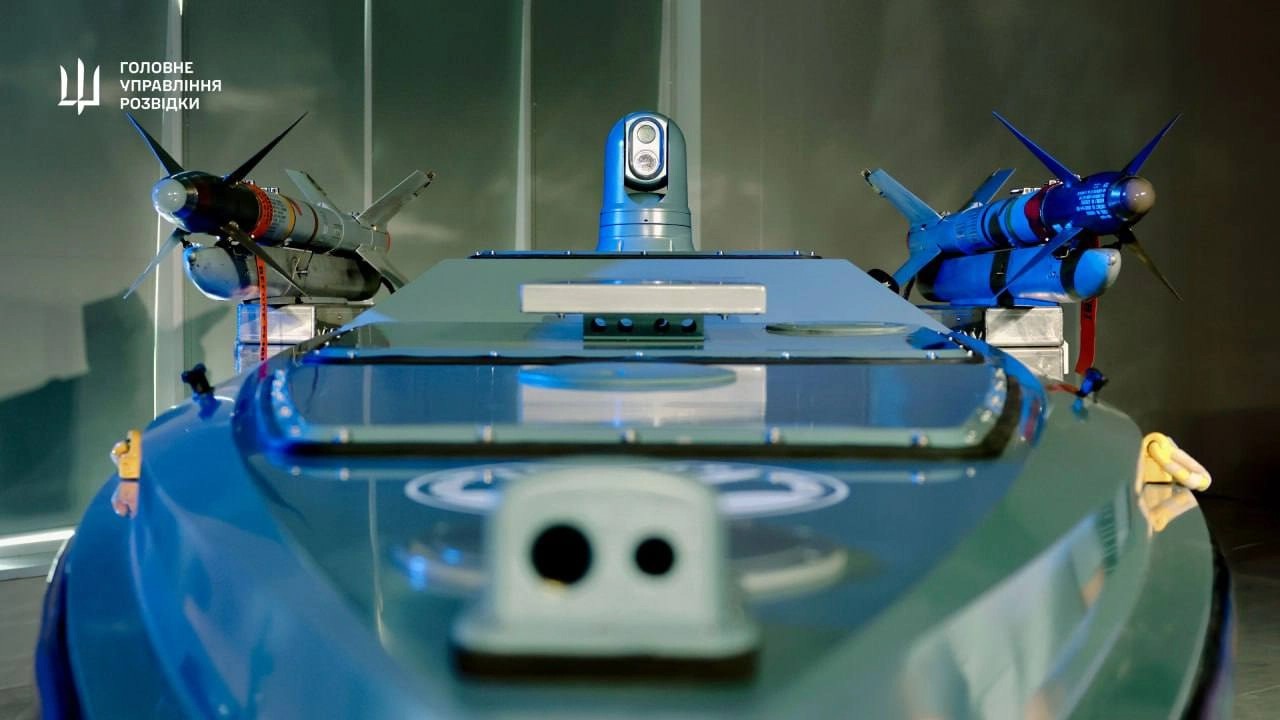
- Missile and platform contested. Better-supported reporting attributes the kill to a Magura V7 firing US-supplied AIM-9 Sidewinders; earlier reports cited a Soviet-era R-73 on the older V5.
- Strategic payoff. Ukraine's USV campaign pushed Russia's Black Sea Fleet back from the western Black Sea and helped reopen grain shipping — an effect far larger than any single ship.
On the night of May 2, 2025, off the Russian port of Novorossiysk, an uncrewed Ukrainian boat fired a missile and destroyed a Russian Su-30 fighter — a roughly $50-million aircraft brought down by a drone costing a sliver of that. Two Su-30s went down in the same mission, later confirmed by Ukraine's intelligence chief. It was the first time in history a naval drone killed a manned aircraft, and it is the clearest signal yet that the cheap-iron loop that reshaped the land war has now run its full course at sea.
What the sea drone does — and what it doesn't
The Black Sea is where Ukraine's asymmetric strategy was forced earliest and has gone furthest. After 2022, Ukraine had effectively no navy to set against a dominant Russian Black Sea Fleet. Rather than match ships hull-for-hull — an impossible contest — it built cheap, fast unmanned surface vessels and used mass and surprise. The result reads like the FPV story transplanted to water: a few hundred thousand dollars of boat threatening warships and aircraft worth tens or hundreds of millions.
The May strike added a genuinely new capability. By mounting air-to-air missiles on a drone boat, Ukraine turned a strike platform into something close to a mobile, expendable air-defense node — one analyst framing is that the sea drones acquired the function of an air-defense system. That inverts a basic assumption of the war at sea: aircraft hunting boats could now be killed by the boats.
The limits are real and worth stating plainly. This is not a repeatable, industrial-scale air-defense layer the way interceptor drones are against Shaheds; it is a small number of high-value special-operations strikes, dependent on scarce Western missiles and specific conditions. The platform and weapon attribution is itself contested — the better-supported reporting points to a Magura V7 firing AIM-9 Sidewinders, while earlier accounts cited a Soviet-era R-73 on the smaller V5. A widely-shared claim that a Magura sank the cruiser Moskva in 2022 is simply wrong — that loss is attributed to Neptune anti-ship missiles, not naval drones — and is a useful reminder that the sea-drone record is impressive enough without the myths.
The loop, not the trophy
Read the Black Sea as one continuous cycle and the jet kill is not a trophy — it is the predictable next move after years of escalation.
2023 — the boats arrive. Magura USVs first drew attention in May 2023 by damaging a 4,000-ton Russian intelligence ship far from the Ukrainian coast. Through that year, repeated strikes damaged or sank Russian vessels and forced the fleet to thin out its presence and relocate assets eastward.
The Russian countermeasure — air power. Unable to stop the boats at sea, Russia increasingly used helicopters and jets to detect and destroy the USVs before they reached anchorages. Aircraft became the answer to the surface-drone problem.
The Ukrainian answer — arm the boats. Ukraine's response was not a better boat but a different payload: air-to-air missiles on the USV. On Dec 31, 2024, a Magura V5 downed two Mi-8 helicopters — the first naval-drone air kills. Five months later came the Su-30s. The countermeasure to the countermeasure was to make the hunted lethal to the hunter.
The next turn, already visible. In the same May operation, Russian forces reportedly launched explosives-laden FPV drones from boats to intercept the incoming USVs, striking at least two. Drone-on-drone combat has reached the water. The loop does not close with the jet kill; it simply moves to the next contested layer.
Why the consequences exceed the headline
The strategic value of the USV campaign was never any single ship or aircraft. It was sea denial. By making the western Black Sea dangerous for large surface combatants, Ukraine pushed Russia's fleet back toward its own coast and helped reopen commercial shipping lanes — restoring grain exports that matter to global food markets far beyond the war. That is the international story beneath the tactical one: a country with almost no navy used cheap robots to neutralize the practical value of a far larger fleet.
There is also a restraint worth recording. In the May engagement, reports indicate one downed Su-30's crew was rescued by a civilian cargo ship that the Ukrainian drones did not attack — a detail that distinguishes targeted military action from indiscriminate violence, and one this publication notes deliberately.
What to watch next
- Repeatability versus the missile supply. Air-to-air kills from USVs depend on scarce Western missiles and special-operations execution. Watch whether this becomes a sustained capability or stays a handful of landmark strikes — the difference is entirely about magazine depth, not concept.
- Drone-on-drone at sea. With Russia launching FPVs to intercept USVs, the contest is moving to who controls the surface-and-low-air layer around the boats. Watch for dedicated defensive drones escorting strike USVs.
- Export and imitation. Navies worldwide are studying the Black Sea as a template for cheap sea denial. Watch which states move from study to fielding — and whether the missile-armed USV concept proliferates.
Sources
- 1USNI Proceedings — "Ukraine's Magura Naval Drones: Black Sea Equalizers" (Sep 2025) ↗
- 2Defence Intelligence of Ukraine (HUR) — "World First: …Destroys Russian Su-30 …with a Sea Drone Strike" (May 3, 2025) ↗
- 3Bulgarian Military — "Ukrainian sea drone downs $50M Russian Su-30 in Black Sea" (May 3, 2025) ↗
- 4EMPR / Mezha — "The First in the World to Shoot Down a Su-30: New Photos of the Magura V7" (Dec 23, 2025) ↗
- 5Defense Express — "The Missile Used By Ukrainian Magura Drone …Was the AIM-9 Sidewinder" (May 4, 2025) ↗
- 6Naval News via Mezha / Yahoo — "Photo reveals Ukrainian sea drone that downed Russian Su-30 fighter" ↗