Цей звіт поки не перекладено — показуємо англійський оригінал.
Russia built a drone Ukraine's cheap interceptors cannot catch
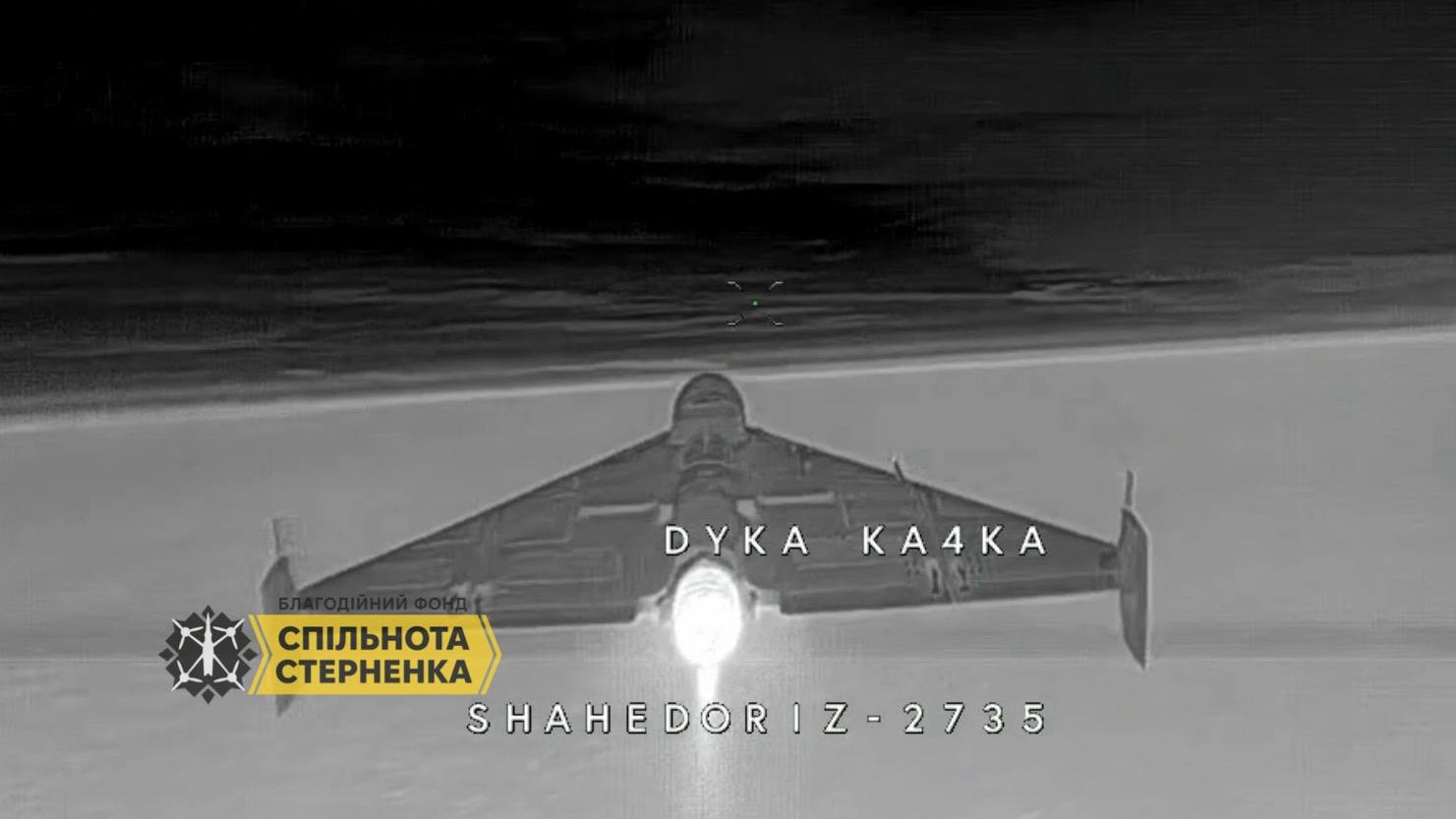
In May 2026, Russia fired 8,161 Shahed type unmanned aerial vehicles (UAVs) at Ukraine — the largest number of UAVs ever launched in a single month during the war. Ukrainian air defense shot down 91.73% of the Shaheds; however, most were not brought down using U.S.-supplied Patriot missile defense batteries or fighter aircraft. Rather, they were brought down by inexpensive ($1,000-$3,500 per vehicle) unmanned aircraft that did not exist until recently (Brave1, Military Times).
This represents the ratio of expenditure Ukraine spent developing in 2025. The estimated cost of a one-way attack UAV varies widely; but generally ranges from $30,000 to $80,000 per UAV, based upon differing estimates (ISIS, TWZ, EST). In response to Russia’s attacks, Ukraine uses interceptors costing a fraction of the cost of the Russian UAVs. These interceptors are designed to operate in large volumes and are flown by an operator who assumes manual control of the last few seconds of flight before impact (Military Times). As stated above by Brave1, a group providing funding and testing for development of these systems, “the majority” of the Shaheds are currently being destroyed by interceptors. Brave1 states these represent a new class of weaponry and have become the predominant layer of air defense (TWZ, CC).
The economic advantages of using an interceptor UAV to destroy incoming UAVs will continue as long as the interceptor can reach the target. That is the limitation Russia has now reached.
Key facts
- Russia launched 8,161 Shahed type drones at Ukraine in May 2026, the heaviest month recorded in the war.
- Ukrainian air defence reported a 91.73 percent interception rate against those May 2026 launches.
- Nightly drone volumes now exceed 700 on heavy nights, with about 700 launched in a single day on 1 April 2026.
- A Russian one way attack drone is estimated to cost roughly 30,000 to 80,000 dollars, with figures varying by source.
The Speed Wall
Russia started combat employment of the Geran-4 UAV in May 2026. According to Ukraine’s Defense Intelligence agency, the Geran-4 UAV was developed specifically to defeat interceptors (DIU via defence-industry.eu, VI). The data supports this claim. The Geran-4 UAV maneuvers at speeds up to 400km/hr and reaches top speeds of approximately 500km/hr. Additionally, the Geran-4 UAV can fly at altitudes of up to 5,000 meters and carry a payload of 50-90kg fragmentation or thermobaric explosives over distances of up to 450km (DIU, Brave1, VI). For comparison, the Geran-2 UAV (on which the Geran-4 is based), reportedly operates at much lower speeds. Estimates indicate that the Geran-2 operates at speeds ranging from approximately 180-250km/hr (technology.org, Ukrainska Pravda, sources vary). The Geran UAV family also includes the Geran-5 UAV, which is described by DIU as a small cruise missile and achieves speeds of approximately 600km/hr (Ukrainska Pravda, VI).
On the other hand, most fielded Ukrainian interceptors typically operate within a range of 315-350 km/hr. Only a limited number of upgraded models are capable of reaching speeds up to 450 km/hr (technology.org, Military Times, VI & SS). Without sufficient speed to keep pace with a target UAV traveling at significantly higher speeds than itself, an interceptor cannot successfully engage the target. The primary purpose of the Geran-4 UAV is to travel through the layer of airspace where it previously killed the slower flying Geran-2 UAV.
At this juncture in the conflict cycle, Ukraine is facing a further complication. If Ukraine cannot effectively neutralize the Geran-4 UAV with a low-cost interceptor ($2,000) then Ukraine will likely have to transition to employing more costly and scarce weapons such as shoulder-fired anti-aircraft missiles. Short-range air defense systems. Or cannon rounds from a fighter. Each of these options would reverse the favorable exchange rate that Ukraine created to gain an advantage over Russia (technology.org, Analysis). Russia does not need the Geran-4 to be low-cost. All Russia needs to do is push Ukraine into spending money on their expensive magazines and deplete their stocks.
There are two factors preventing this situation from becoming a rout. First, Russia has not yet achieved mass production status with respect to the Geran-4 UAV. According to open-source monitoring services, Russia is currently only firing between 10-12 jet drones per night. Although Russia plans to increase the percentage of jet drones in their arsenal to 50%, and although this may eventually occur quickly enough to create problems for Ukraine, this has not happened yet. Second, the Geran-4 UAV is not inexpensive. A turbojet-powered airframe costs considerably more than a gas powered airframe like the Geran-2. Despite reports indicating that Russian aerospace manufacturing output has increased by 117% year-over-year in April 2026 (DWIM), it appears that production capacity remains a limiting factor at present (SS). Therefore, we find ourselves in a scenario involving an unprecedentedly massive UAV strike campaign conducted by Russia, nearly all of which is still being thwarted by Ukraine’s defenses; a new threat representing an order-of-magnitude improvement in speed; and both sides racing to achieve some form of parity. Which curve will bend first?
The Engine Is Chinese
According to reports from DIU and Brave1 (VI), the Geran-4 UAV employs a Telefly turbojet manufactured by China. There exists at least two versions of this turbojet (DIU & VI). In essence, the entire Russian Jet Drone Program rests upon a foreign-made component whose supply chain can potentially be targeted by sanctions pressure (although no evidence indicates that such targeting is taking place at present) (DWIM, SS). This is merely another example of a recurring theme throughout this conflict. An advantageous capability constructed using components sourced from abroad may be switched off by others.
Ukraine Can Sell Solutions
As outlined in previous sections regarding this conflict cycle, the interceptor system that provided Ukraine with a favorable exchange ratio with regards to destroying Russian UAVs is now being exported. During Iran’s war with Israel in early 2026, Ukraine deployed interceptor teams and pilots to Jordan and parts of the Gulf region pursuant to requests made by Washington D.C. After Iran's Shahed-class UAVs and missiles consumed over 800 Patriot interceptors in less than three days — roughly double what Ukraine received from international allies over four years of conflict — Israeli Prime Minister Benjamin Netanyahu requested assistance from President Volodymyr Zelenskyy to provide his country with assistance combating Iranian UAVs (Military Times & Zelensky). The U.S. Department of Defense is purchasing a domestic version of the Merops interceptor system for approximately $15,000 per unit and declining rapidly towards $10,000 at scale — both figures are well below the estimated value of $30K-$50K per Shahed-class UAV (TWZ & VI). Additionally, Ukraine has licensed its Octopus interceptor system for manufacture in the UK (RBC-Ukraine & SS). The inexpensive UAV that Ukraine built while fighting for its independence is now an allied asset and the cost-curve argument supporting its viability is traveling with it.
The scale associated with its production is impressive. By late-June 2026 more than 400 Ukrainian combat units placed orders for over 500 thousand drones and related equipment through Brave1’s Market Portal platform. The platform has already handled transactions worth over $737M since its creation one year prior (Defense Ministry of Ukraine & CC). Over twenty manufacturers produce interceptors (National Security and Defense Council, January 2026 & VI). Orders placed on Ukraine’s State Marketplace portal are fulfilled in under ten days (robotics.press & SS). This is the apparatus that must iteratively improve performance at a faster rate than any jet engine.
Tracking Points
Russian launch rates for jet drones. Currently Russia fires approximately ten-twelve jet drones per night. Tracking the upward trend towards Russia’s desired fifty percent of total Shahed-type drone output operating as jet drones will help identify trends in this area (EST & Ukainska Pravda). Fielded Ukrainian interceptors designed to compete with Russian jet drones. Brave1 has provided funding for twelve separate groups working on interceptors able to reach speeds greater than 450km/hr. One manufacturer — General Chereshnya — demonstrated an interceptor able to address threats posed by Russian-produced jet-class Shaheds (Kyiv Post & RBC-Ukraine & VI & SS). Pressure on Telefly Production Line. If sanctions or attacks are successful in disrupting China’s supply lines for Telefly turbojets used in Russian-operated Geran-4 UAVs then Russia’s ability to mass-produce jet drones will slow dramatically due to lack of available engines (DWIM & SS).